The New Backbone of the Digital Age
Every generation has its defining leap in communication. Telegraph lines once reshaped distance. Copper telephone wires connected homes across continents. Cable brought entertainment to billions. But today, one technology has risen far above the rest—sparkling at the heart of the modern world’s digital pulse. That technology is fiber internet. In an era where nearly everything depends on moving data—streaming, remote work, cloud computing, gaming, AI, augmented reality, and even household appliances—connectivity isn’t optional. Speed is no longer a luxury. Stability is no longer negotiable. And future-proofing isn’t a perk; it’s a requirement. Fiber internet checks every one of those boxes effortlessly. Its performance is so superior that it has quickly rewritten the standards for what “fast internet” truly means. In fact, the leap from cable to fiber is as transformative as the leap from dial-up to broadband. It is not simply “better internet”—it is a completely different class of technology. This article explores why fiber internet has become the gold standard for modern connectivity, how it outperforms older systems at every level, and what its rise means for homes, businesses, cities, and the digital future.
A: Often, especially for upload, but local plan tiers and equipment still matter.
A: No. Fiber brings service to the home; Wi-Fi distributes it indoors.
A: Construction cost, permits, pole access, and local demand shape deployment.
A: Only if your devices, router, and workload can use that speed.
A: Yes. Power failures, equipment faults, and cable cuts can still interrupt service.
A: Yes, when routing and home networking are also strong.
A: Upload affects calls, backups, creators, cameras, and remote work.
A: Run wired and wireless tests in the rooms where service matters.
A: Yes. Local and municipal providers can be excellent where available.
A: The plan with enough speed, fair pricing, low latency, and dependable support at your address.
The Science Behind Fiber: Why Light Beats Electricity
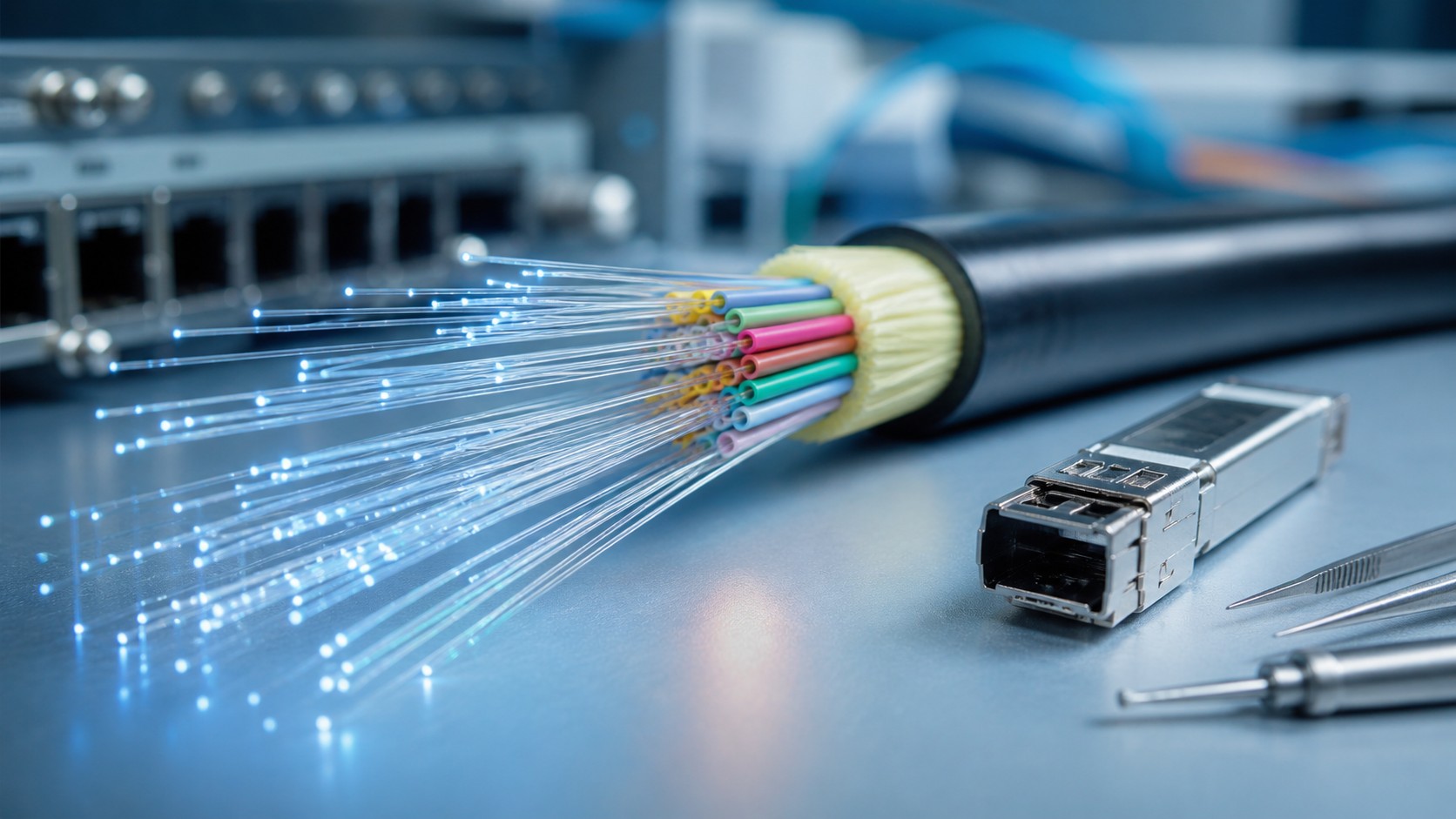
Fiber internet’s defining advantage begins with its medium. Instead of using electricity passed through metal wires—as cable and DSL do—fiber uses pulses of light traveling through glass the width of a human hair. This instantly unlocks enormous benefits.
Light is the fastest medium we can practically use to move information. It travels at incredible speed and can carry much more data at once without interference or degradation. While copper wires struggle over long distances, fiber maintains integrity for miles. Where copper is vulnerable to noise, heat, and electromagnetic interference, glass is immune.
This combination of speed, purity, and stability makes fiber the only communication infrastructure capable of reliably supporting the bandwidth needs of the digital age.
Unmatched Speeds: Beyond the Limits of Copper
Cable and DSL were never designed for the demands of today’s internet. Their performance is limited by both physics and decades-old architecture. When you push these systems toward their limits, bottlenecks appear everywhere—shared neighborhood trunks, upload throttling, noise on the line, and inconsistent peak-hour performance.
Fiber sidesteps these limitations entirely.
Symmetrical Speeds: A Modern Necessity, Not a Luxury
One of the most transformative advantages of fiber is symmetrical speed. That means upload and download speeds match.
Most cable internet connections prioritize downloads, leaving uploads dramatically slower. But in a world fueled by two-way communication—video calls, cloud backups, remote work, gaming, and content creation—uploads matter more than ever.
Fiber makes them equal.
Multi-Gigabit and Beyond
Standard gigabit fiber is already dramatically faster than cable, but carriers are rapidly deploying multi-gigabit tiers: 2 Gbps, 5 Gbps, even 10 Gbps to homes. And the wild thing? The fiber running to homes today often doesn’t need to be replaced to support those upgrades. Only the electronics at each end change.
Copper cannot compete with that future.
The Reliability Factor: Why Fiber Is So Stable
Speed might get the headlines, but reliability is the secret reason fiber has become the gold standard.
Where cable internet might slow during peak hours, fiber maintains consistent performance because of its architecture. The signal doesn’t degrade with distance or suffer from electrical interference. Weather barely affects it. And because each home typically has a dedicated fiber line from a neighborhood node, congestion is dramatically reduced.
Reduced Latency: A Smoother, More Responsive Internet
Latency—the delay before data moves—is often overlooked. But in practice, it determines whether an internet connection feels “fast.”
Fiber delivers exceptionally low latency, which translates to:
smoother video calls
faster website loading
more responsive gaming
better performance in cloud tools
improved smart device communication
Low latency is the invisible foundation of a seamless digital experience, and fiber excels at it.
Fiber for the Home: Elevating Everyday Life
The shift to fiber connectivity changes more than just speed tests—it changes how an entire household experiences the internet. Activities that once felt taxing become effortless.
Remote Work and Schooling Become Seamless
No freezing Zoom windows. No dropped calls. No lag while sharing screens. No delays when uploading files. Fiber ensures professional-grade stability right from the living room.
Streaming and Entertainment Rise to a New Level
4K and 8K streaming, multi-device use, and cloud-based entertainment become frictionless. Homes can have TVs streaming movies, PCs gaming online, tablets running video chats, and smart devices updating—all at once—without slowdown.
Cloud-Connected Living Thrives
Smart homes depend on constant data flow. Fiber removes the bottleneck. Lighting systems respond instantly. Home security cameras upload HD footage without stuttering. Cloud storage syncs smoothly in the background.
Fiber isn’t just about faster internet—it’s about unlocking the next chapter of how we live.
Why Businesses Treat Fiber as Essential Infrastructure
For businesses, fiber is not a luxury—it’s the backbone of operations. Retail, healthcare, logistics, education, and finance all depend on real-time data. A single moment of network instability can mean lost productivity, lost revenue, or lost customers.
Fiber provides the responsiveness and bandwidth modern business requires:
large file transfers and backups happen instantly
point-of-sale systems stay online
cloud tools run smoothly without lag
remote offices stay connected
uptime rises and tech headaches fall
A growing number of firms treat fiber connectivity as seriously as they treat electricity. Without it, operations feel sluggish, slow, or unstable.
Security and Stability: Fiber’s Hidden Advantages
One aspect of fiber that often goes unnoticed is its security. Because fiber uses light, it’s far more secure than copper. Tapping into a fiber line without detection is extremely difficult. Any physical damage or interception attempt disrupts the signal immediately.
Additionally, fiber’s immunity to electromagnetic interference makes it stable even in electrically noisy environments. Hospitals, factories, airports, and financial institutions prefer fiber for this very reason—clean, consistent communication even under demanding conditions.
The Future-Proof Factor: Why Fiber Outlasts Every Other Technology
Perhaps the most compelling argument for fiber as the gold standard is how future-ready it is. The world’s data usage is doubling every few years, and applications like VR, AI processing, holographic communication, and autonomous devices will demand more from networks than ever before.
Cable internet is already straining near its limits. DSL has long been obsolete. Wireless technologies evolve fast, but they all rely on the strength of wired backbones.
Fiber stands alone as the only last-mile technology with virtually unlimited potential.
Simple Upgrades Instead of Network Rebuilds
When carriers upgrade network speeds, they typically replace equipment on each end of the connection—not the fiber itself. This unlocks decades of growth without tearing up roads, replacing cables, or rebuilding infrastructure.
Fiber installed today could still support the internet of 2050.
Fiber and the Smart Cities of Tomorrow
As cities evolve into smarter, more connected environments, fiber is the bedrock enabling it. Everything from traffic systems to emergency services to high-density Wi-Fi relies on strong, stable connectivity.
Fiber makes it possible to connect:
traffic lights and sensors
public transportation networks
5G small-cell towers
public safety cameras
municipal facilities
smart water and power grids
Cities with robust fiber infrastructure can deliver cleaner data, faster responsiveness, and stronger quality-of-life improvements for residents.
The Environmental Benefits: Fiber Builds Greener Networks
Fiber isn’t just the fastest and most reliable option—it’s also the most environmentally responsible. Because light loses almost no energy as it travels, fiber networks consume far less power than copper-based systems.
Fiber equipment also produces less heat and requires less active cooling. More lifespan with fewer replacements leads to less electronic waste. And as the backbone for cloud infrastructure, fiber supports more energy-efficient digital transformation across industries.
The green advantage is yet another reason fiber is the long-term communication standard.
Why Fiber Adoption Is Accelerating Worldwide
Governments, private companies, and municipal networks around the world are accelerating fiber deployment. Billions of dollars are being invested into urban and rural fiber expansion, and adoption is climbing rapidly.
The reason is simple: nations with strong digital infrastructure achieve better economic outcomes, stronger technological innovation, and improved quality of life. Fiber powers those advancements.
As cloud computing, remote work, robotics, automation, and digital education continue to grow, fiber becomes more than connectivity—it becomes national infrastructure.
The Bottom Line: Fiber Is the Connectivity Standard of the Future
Fiber internet has earned its title as the gold standard because it stands far above every other technology in nearly every metric that matters:
faster speeds
symmetrical uploads
unmatched stability
lower latency
greater security
cleaner signal integrity
longer lifespan
almost limitless scalability
If cable and DSL were stepping stones in the path of technological progress, fiber is the destination. It connects homes and businesses to the world with clarity, consistency, and power that older networks simply cannot match.
Most importantly, fiber is not just a technology for today’s needs—it is the infrastructure for tomorrow’s innovations. The digital world is expanding fast, and fiber is the conduit through which that future will flow.
Fiber isn’t just “better internet.”
It’s the foundation of modern connectivity—reliable, resilient, and ready for whatever comes next.