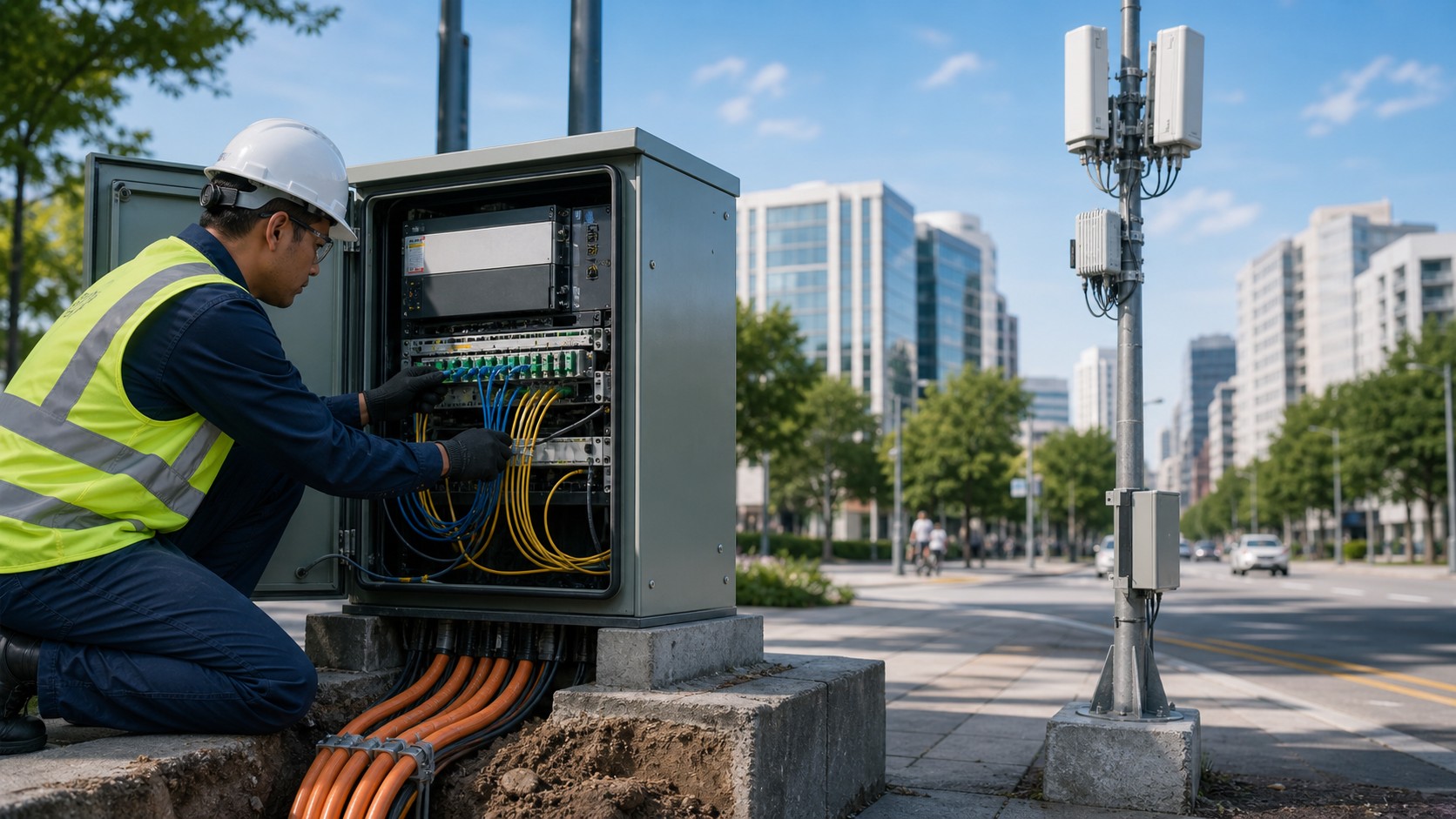
The New Digital Lifeline Connecting the Modern World
Across cities, suburbs, and rural communities, a quiet revolution is taking place beneath our feet. Small strands of glass, no thicker than a human hair, are being pushed through conduits, wrapped through neighborhoods, pulled under streets, and brought directly into living rooms. This technology—Fiber to the Home, or FTTH—has become the new gold standard in internet connectivity. But FTTH is more than just “faster internet.” It is a complete reshaping of digital life. In an era where nearly every aspect of our world relies on reliable connectivity—remote work, digital classrooms, streaming entertainment, telehealth, smart homes, cloud gaming, AI assistants—the type of connection that reaches your home influences everything you experience online. FTTH isn’t just keeping pace with the digital age; it’s defining it. This guide explores what FTTH truly is, how it works, and why it’s becoming essential infrastructure for the next generation of households and communities.
A: Often, especially for upload, but local plan tiers and equipment still matter.
A: No. Fiber brings service to the home; Wi-Fi distributes it indoors.
A: Construction cost, permits, pole access, and local demand shape deployment.
A: Only if your devices, router, and workload can use that speed.
A: Yes. Power failures, equipment faults, and cable cuts can still interrupt service.
A: Yes, when routing and home networking are also strong.
A: Upload affects calls, backups, creators, cameras, and remote work.
A: Run wired and wireless tests in the rooms where service matters.
A: Yes. Local and municipal providers can be excellent where available.
A: The plan with enough speed, fair pricing, low latency, and dependable support at your address.
What Exactly Is Fiber to the Home?
Fiber to the Home refers to an internet connection in which a dedicated fiber-optic line runs directly from a central network node all the way to an individual household. Unlike older technologies such as DSL or cable—which rely on decades-old copper wires—FTTH is built entirely on optical cables that transmit pulses of light instead of electrical signals.
That difference in transmission medium changes everything.
Light moves faster than electrons. It experiences less interference. It doesn’t weaken as quickly over long distances. It can carry vastly more data. And it can be upgraded indefinitely simply by changing the electronics at either end rather than ripping out the cable itself.
A single fiber strand—thin, flexible, durable—has the potential to carry terabits per second. And because FTTH brings that fiber directly into the home, users get to experience internet capacity that was once reserved for enterprise networks, data centers, or telecom backbones.
In short, FTTH is the most advanced residential connectivity technology available today.
How FTTH Works: A Journey From Light to Living Room
To appreciate why FTTH is so powerful, it helps to understand how it works behind the scenes.
The Optical Line to the Neighborhood
Your home’s fiber connection begins at an Optical Line Terminal (OLT) located at a central office or data center. From there, the fiber branches out through underground ducts or aerial cables until it reaches a distribution point near your home.
At this point, a Passive Optical Network (PON) typically divides the signal, splitting a single fiber strand into multiple smaller lines that feed different homes. The word “passive” is important: there are no powered switches or amplifiers along the route—only high-efficiency optical splitters.
This makes the network incredibly stable and energy-efficient.
The Drop Fiber Into Your Home
From the distribution point, a small fiber line—called a “drop”—is run directly to your home. It may be attached overhead, run through a shallow trench, or pulled through conduit depending on the local infrastructure.
This drop fiber terminates in an Optical Network Terminal (ONT) mounted inside or outside your home. The ONT acts as the translator that converts optical light signals into digital data your devices can understand.
The Light That Carries Your World
Inside the fiber, data travels as pulses of infrared light, typically using multiple wavelengths so upstream and downstream traffic can move simultaneously. It’s immune to electrical noise. It doesn’t corrode. It isn’t affected by lightning or heavy machinery. And because multiple colors of light can coexist, the bandwidth is virtually limitless.
The result is a clean, powerful, immensely scalable connection that delivers consistent performance regardless of distance or neighborhood congestion.
FTTH vs. Cable, Wireless, and DSL: The Differences That Matter
Many providers offer internet through cable, copper phone lines, or wireless networks. But FTTH stands in a category of its own.
1. Speed and Capacity
Cable and DSL rely on copper wiring originally built for TV and voice—not high-speed data. These materials are limited by physical constraints such as electrical resistance and interference.
Fiber, on the other hand, carries information using light. It doesn’t slow down, weaken, or distort easily. Even basic FTTH plans outperform high-end cable offerings, and future fiber upgrades require no new cables—just updated electronics.
2. Reliability and Stability
Copper systems are more vulnerable to:
Weather disruptions
Electromagnetic interference
Line noise from electrical appliances
Distance-based slowdowns
Fiber avoids all of these issues. Whether it’s a stormy day or a busy neighborhood, FTTH provides the same fast speeds with near-perfect uptime.
3. Upload Speeds
Cable networks are designed to prioritize download traffic. Upload speeds remain a fraction of downloads, which is deeply limiting for:
Cloud backups
Video calls
Online learning
Content creation
Remote work
FTTH offers symmetrical speeds—upload equals download. This is a game changer for modern households.
4. Future-Proofing
Every year, our connected lives demand more bandwidth. Cable and DSL systems have hit a wall. Fiber hasn’t even come close to its limits. Once installed, FTTH is essentially ready for decades of upgrades.
Why FTTH Is Becoming Essential for Modern Households
The reasons people increasingly depend on FTTH go far beyond speed tests. Fiber directly enhances everyday life.
Uninterrupted Streaming and Entertainment
Households with multiple users streaming 4K or 8K content, gaming online, or working from home simultaneously need more than just “fast internet.” They need stable, congestion-free connectivity. FTTH handles bandwidth-heavy activities with ease.
Remote Work That Actually Works
Video conferencing, cloud drives, shared workspaces, and remote desktops run smoother on fiber. Jitter-free calls, quick uploads, and zero freezes define the FTTH experience.
World-Class Online Education
Students benefit from low-latency virtual classrooms, interactive simulations, and seamless screen sharing.
Smart Homes That Feel Smart
FTTH ensures:
Instant device updates
Responsive smart assistants
Smooth security camera feeds
Zero-lag home automation
As the number of home devices rises, fiber’s superior capacity becomes more valuable.
Cloud Gaming and VR
Cloud gaming relies almost entirely on low latency and consistent throughput. FTTH eliminates input lag, offering console-quality performance over the internet.
Virtual and mixed reality also demand fiber-level stability, especially for real-time rendering and live interaction.
Telemedicine and Precision Healthcare
FTTH improves:
HD video consultations
Real-time health monitoring
Remote diagnostics
As digital healthcare expands, broadband stability becomes a life-quality factor—not just a convenience.
How FTTH Builds Smarter, More Resilient Communities
The benefits of FTTH extend far beyond individual homes. Entire communities improve as fiber expands.
Increases Home Values
Real estate studies show that fiber-connected homes can see measurable increases in property value. In competitive markets, FTTH is becoming a top selling point.
Attracts Businesses and Talent
Companies rely on high-speed connections. Communities with strong fiber footprints draw remote workers, tech entrepreneurs, and high-growth industries.
Boosts Local Innovation
Fiber infrastructure supports:
Makerspaces
Remote research
Startup incubators
Smart-campus initiatives
These become engines of local economic growth.
Enables Smart City Infrastructure
Fiber underpins smart energy grids, intelligent transportation systems, and advanced public safety. FTTH helps cities become cleaner, safer, and more efficient.
Strengthens Communication in Emergencies
During storms or crises, copper networks often fail. Fiber’s resilience ensures communication stays stable when communities need it most.
Why FTTH Matters for the Future of the Internet
The future of online life is defined by technologies that demand more bandwidth, more reliability, and more real-time precision than ever. FTTH is not just keeping up—it’s paving the way.
1. AI-Powered Homes
From predictive appliances to learning thermostats, future homes will depend on constant high-quality connectivity.
2. Massive Device Growth
The average household may soon host hundreds of smart devices. Only fiber can keep up with the traffic.
3. Holographic and Immersive Media
As entertainment shifts toward 3D holographic experiences, fiber will be essential.
4. Remote Robotics
Remote robot operation for healthcare, manufacturing, and public safety requires instant response—something only fiber can deliver.
5. Decentralized Computing
Blockchain, decentralized clouds, and distributed processing models rely on high-speed symmetric connections.
FTTH is the infrastructure foundation enabling all of these next-generation digital realities.
The Installation Process: What Homeowners Can Expect
FTTH installation is more straightforward than many expect. Technicians run a small fiber line from the nearest distribution point to your home. It may involve trenching, conduit fishing, or aerial connections depending on local layouts.
Inside your home, a small ONT is mounted—usually near where power and your router will be located. This device replaces traditional cable modems. Once installed, it emits no noise, requires little maintenance, and lasts for years.
The entire process typically takes 1–3 hours, and upgrades in the future only require swapping the ONT, not the fiber itself.
The Long-Term Impact of FTTH: Foundation for a Fully Connected World
FTTH is more than infrastructure—it’s a generational investment. The homes wired today will be the smart homes, remote offices, digital classrooms, and telehealth hubs of tomorrow.
Decades from now, children will grow up in homes where fiber connections are as essential as electricity or running water. Communities that adopt FTTH early will reap long-term advantages in education, economic opportunity, safety, and quality of life.
Fiber to the Home is not just a network upgrade; it is the future’s lifeline.
FTTH Is the Bright Path Forward
As digital life expands at an unprecedented pace, FTTH stands poised to support every innovation, every connection, and every experience. It delivers not just bandwidth but reliability, adaptability, and long-term stability that no other technology can match.
Fiber to the Home matters because it unlocks possibilities—possibilities that will shape industries, empower communities, enhance homes, and fuel the global digital economy.
In a world powered by data, FTTH is the future’s brightest connection.