


Signal Processing
Signal Processing is the hidden craft that turns messy, real-world transmissions into clear, reliable communication. Every voice call, video stream, GPS fix, radar sweep, and wireless packet begins as a signal—and signals are fragile. They pick up noise, reflections, interference, and distortion as they travel through air, cable, and crowded spectrum. Signal processing is how telecom systems clean, shape, compress, protect, and decode that information so it arrives intact and

Channel Coding & Error Correction
Channel coding and error correction sit at the heart of reliable communication, transforming fragile signals into resilient streams capable of surviving noise, interference, and distortion. Whether data travels across fiber networks, wireless channels, satellites, or emerging quantum links, coding techniques ensure information arrives intact and meaningful. This sub-category explores the science and engineering behind redundancy, parity, and advanced algorithms that detect and repair transmission errors in real time. From foundational

Digital vs Analog Transmission
Digital and analog transmission represent two foundational approaches to moving information across communication channels, each shaped by distinct principles, strengths, and engineering tradeoffs. Analog transmission conveys data through continuous signal variations that mirror real-world phenomena such as sound waves and electromagnetic fields, offering simplicity and natural representation. Digital transmission, by contrast, encodes information into discrete binary values, enabling greater resilience, scalability, and compatibility with modern computing systems. This sub-category explores
Optical Communication Systems
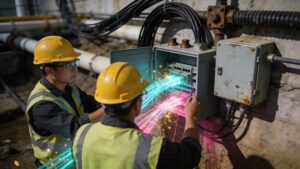
Optical communication systems turn pulses of light into the world’s fastest, most dependable highways for information. Instead of pushing signals through copper as electrical currents, optical networks guide laser light through hair-thin strands of glass, carrying enormous volumes of data across cities, oceans, and continents with astonishing efficiency. This sub-category explores the engineering that makes modern connectivity feel instant—fiber backbones, coherent transmission, wavelength division multiplexing, photonic components, and the signal

Voice & Video Transmission
Voice and video transmission is where telecommunications becomes human—turning breath, tone, expression, and motion into signals that can cross a room or cross the planet. This sub-category explores the systems that make calls feel natural and video feel immediate, even when networks are busy, signals fade, or devices shift between Wi-Fi, cellular, and fiber. Behind every crisp conversation and smooth stream is a chain of engineering decisions: sampling and compression,

Network Protocols
Network protocols are the unseen rules that turn raw connectivity into usable communication. They decide how devices identify each other, how data is packaged, how it finds the best path across crowded networks, and what happens when something goes wrong. Every message—whether it’s a voice call, a video stream, a sensor update, or a cloud request—moves through layers of protocols that negotiate speed, reliability, security, and order. This sub-category explores

Modulation & Multiplexing
Modulation and multiplexing are the twin engines that turn limited spectrum into a crowded, high-speed communication universe. Modulation shapes information onto a carrier—shifting amplitude, frequency, phase, or complex symbol patterns so data can ride through air, fiber, or copper with efficiency and resilience. Multiplexing, meanwhile, is the art of sharing: stacking many users, channels, or services onto the same physical medium by separating them in time, frequency, code, space, or
Telemetry & Control Systems
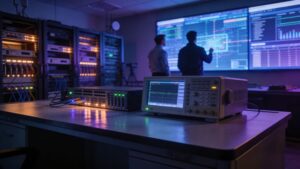
Telemetry & control systems are the quiet conductors behind modern networks—watching, measuring, and steering everything from remote radios to satellite links and smart infrastructure. On Telecommunication Streets, this hub is where raw signals become reliable decisions. You’ll explore how sensors, counters, and logs turn voltage, temperature, latency, jitter, and packet loss into clear health snapshots. You’ll learn why feedback loops matter, how controllers tune power levels, antenna positions, and routing

Satellite Link Design
Satellite link design is where physics, engineering precision, and global ambition intersect to make communication possible across oceans, deserts, and the emptiness of space. On Telecommunication Streets, this hub explores how signals leave Earth, travel thousands of miles through the atmosphere, and return as clear voice, video, and data connections. You’ll discover how engineers build reliable links by balancing power, frequency, antenna gain, modulation, and propagation loss within carefully calculated
Radio Frequency Engineering
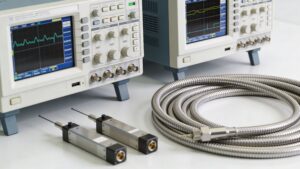
Radio Frequency Engineering is the craft of shaping invisible waves into dependable connections—turning the air itself into a highway for voice, data, navigation, and control. On Telecommunication Streets, this hub dives into the practical magic behind antennas, filters, amplifiers, and the signal paths that stitch together phones, radios, satellites, IoT devices, and wide-area networks. You’ll explore how RF engineers predict propagation, manage interference, and balance gain, noise, and power so
Communication Standards
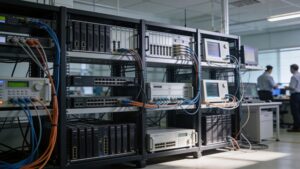
Communication Standards are the invisible agreements that make the connected world feel effortless. They’re the rules of the road that let a phone roam, a router route, a sensor report, and a satellite link handshake with equipment built by someone you’ve never met. On Telecommunication Streets, this hub explores how standards transform chaos into compatibility—defining everything from physical signaling and channel access to encryption, quality of service, and application messaging.

Packet Switching & Routing
Packet Switching & Routing is the behind-the-scenes choreography that turns millions of separate conversations into one smooth, shared network. Instead of sending information as one long stream, modern systems break data into packets—tiny, labeled travelers that can take the fastest path available, reroute around trouble, and reassemble perfectly at the destination. On Telecommunication Streets, this hub explores how switches and routers make those decisions in real time: learning neighbors, building