
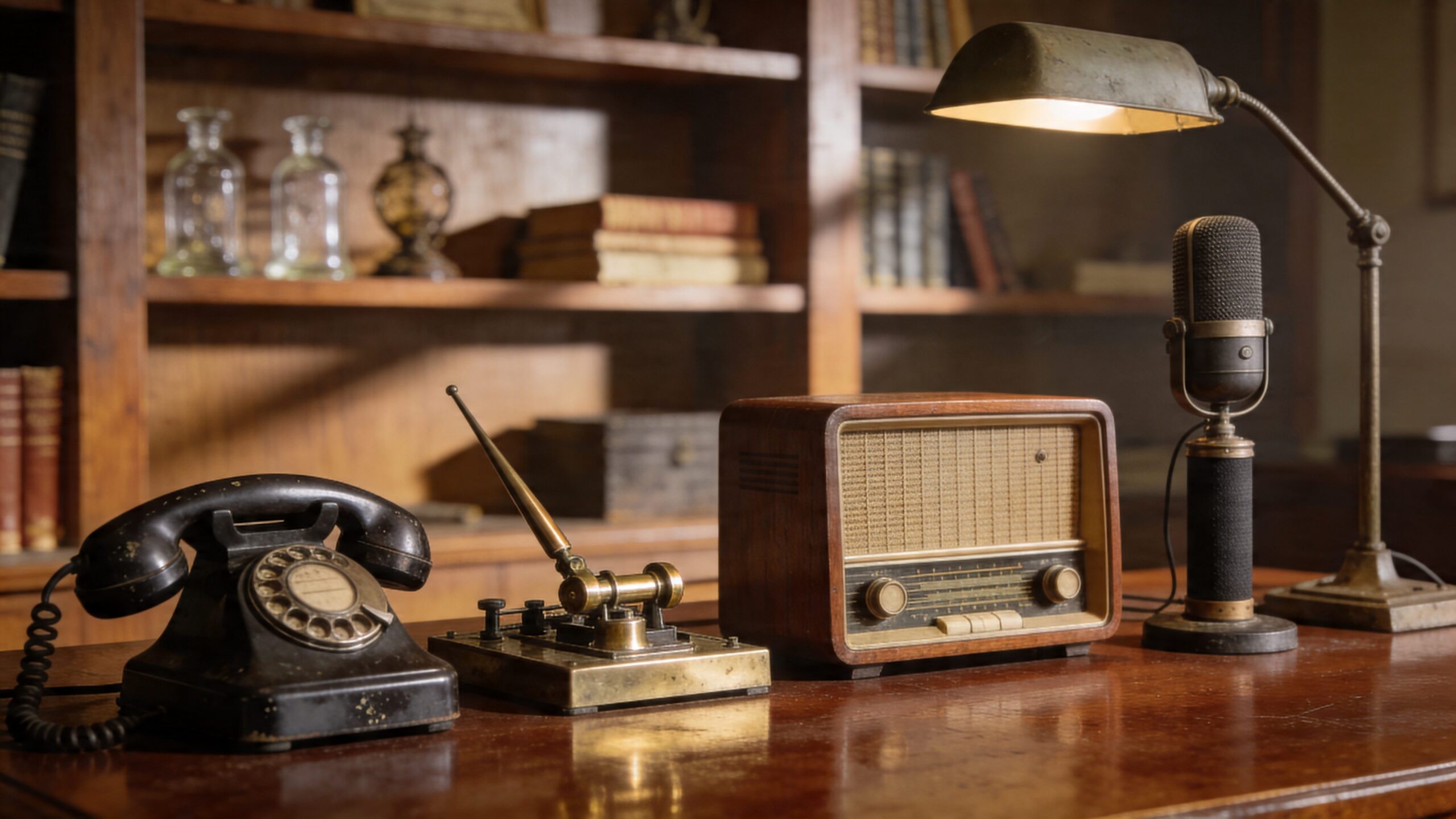
Vintage communication devices capture the spirit of invention, connection, and human curiosity in a way few technologies can. Long before instant messaging, wireless earbuds, and high-speed streaming, people relied on beautifully engineered machines to send voices, signals, and ideas across towns, oceans, and continents. Telegraph keys, rotary telephones, tube radios, switchboards, and early transmitters were more than practical tools. They were gateways to a faster, more connected world, each one marking a bold step in the evolution of communication. On Telecommunication Streets, this category explores the fascinating devices that shaped how people shared news, built relationships, and expanded networks across generations. From the mechanical charm of hand-cranked telephones to the warm glow of vacuum-tube receivers, vintage communication devices reveal the craftsmanship and creativity behind earlier eras of connectivity. Every article in this section brings these remarkable tools into focus, highlighting their design, function, and cultural impact. It is a journey into the technology that helped voices travel farther, messages move faster, and the modern communication age begin.
A: Older tools such as telegraphs, rotary phones, radios, switchboards, and early transceivers.
A: They show how modern telecommunications evolved from mechanical and analog systems.
A: A wired telephone that places calls using a spinning numbered dial.
A: It sent coded electrical pulses across wires to communicate messages over distance.
A: They used vacuum tubes for amplification and produced a distinct analog sound and glow.
A: Yes, many early systems relied on operators to connect calls by hand.
A: Users had to manually select the desired broadcast frequency.
A: Yes, many are prized for their history, craftsmanship, and design.
A: Yes, but they often needed relay points, stronger transmitters, or dedicated lines.
A: They reveal the foundations of global communication and the engineering behind today’s connected world.