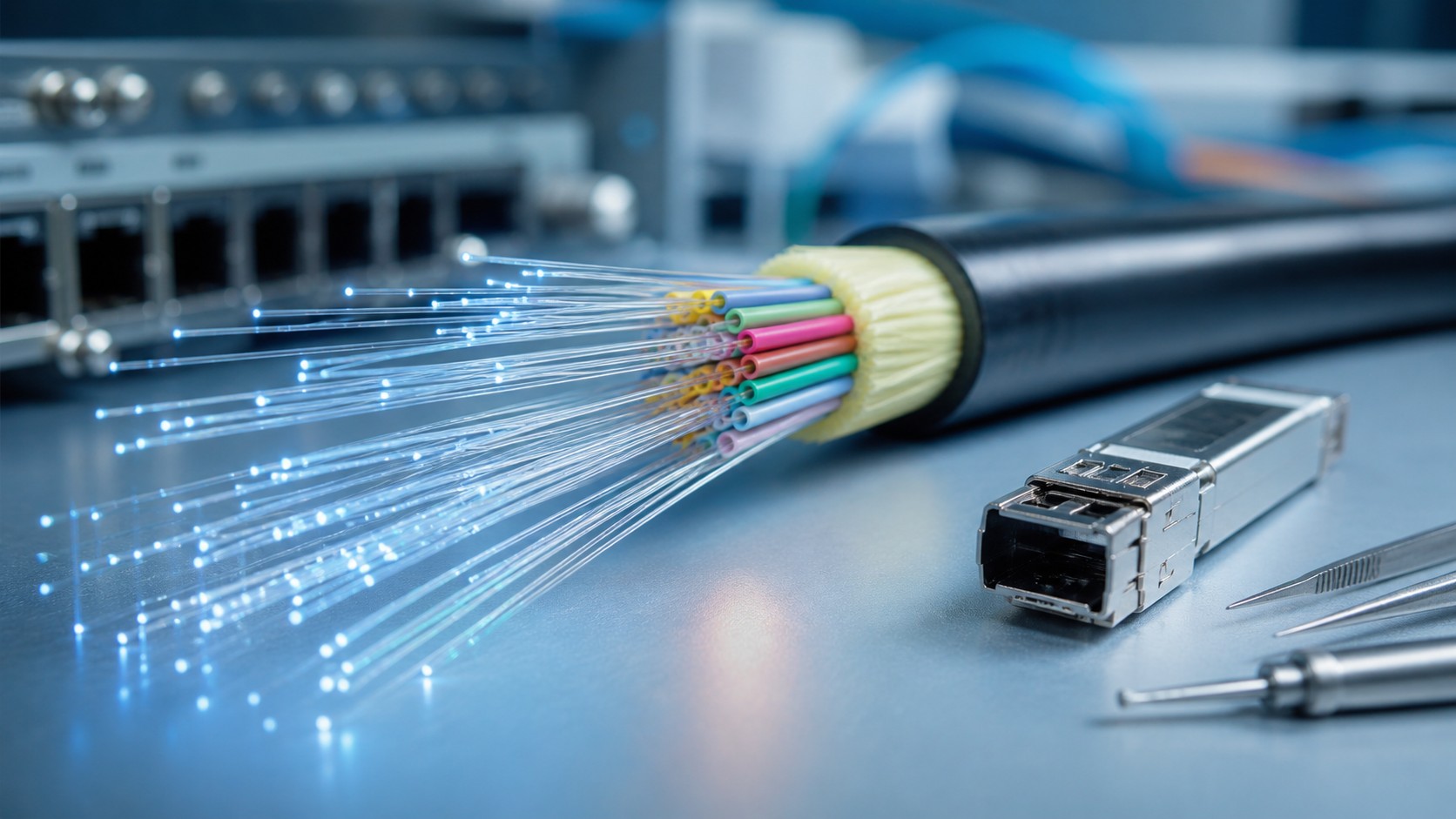
A Modern Showdown of Speed
In a world where every second counts, internet speed is no longer a luxury—it’s a necessity. From remote work and virtual classrooms to high-definition streaming, gaming, and cloud-based workflows, the digital demands on modern households and businesses grow larger every year. As the need for reliable high-speed connectivity intensifies, two technologies dominate the landscape: fiber internet and cable internet. Both are widely available, powerful, and capable of connecting millions of people. Yet beneath the surface, they rely on fundamentally different methods of delivering data. Fiber uses pulses of light traveling through ultra-thin strands of glass. Cable uses electrical signals moving through copper-based coaxial cables. These differences shape everything—from available speeds to bandwidth consistency, peak-time performance, and long-term reliability. This article explores both technologies in depth, revealing how each works, where each excels, and why the battle for internet dominance increasingly leans in fiber’s favor. Whether you’re a homeowner, a gamer, a business operator, or someone researching your next upgrade, understanding these differences can help you make the best choice for your connectivity future.
A: Often, especially for upload, but local plan tiers and equipment still matter.
A: No. Fiber brings service to the home; Wi-Fi distributes it indoors.
A: Construction cost, permits, pole access, and local demand shape deployment.
A: Only if your devices, router, and workload can use that speed.
A: Yes. Power failures, equipment faults, and cable cuts can still interrupt service.
A: Yes, when routing and home networking are also strong.
A: Upload affects calls, backups, creators, cameras, and remote work.
A: Run wired and wireless tests in the rooms where service matters.
A: Yes. Local and municipal providers can be excellent where available.
A: The plan with enough speed, fair pricing, low latency, and dependable support at your address.
How Fiber and Cable Carry the Internet
At a technical level, fiber and cable could not be more different. Fiber internet transmits data using beams of light. Tiny lasers or LEDs flash billions of times per second inside a glass core that guides light with astonishing efficiency. As light pulses bounce along the fiber’s reflective interior, they can travel long distances with minimal loss or interference.
Cable internet, on the other hand, uses electrical signals that travel through copper-based coaxial lines. These cables were originally designed for television broadcasting. While they’ve evolved tremendously, their core physical limitations remain. Electrical signals weaken over distance, are susceptible to external noise, and share bandwidth among multiple users in a neighborhood.
These underlying physics define how each network behaves in real-world conditions. Fiber’s reliance on light provides unmatched speed and stability. Cable’s electrical signals are capable but inherently more vulnerable. Understanding this technical distinction sets the stage for comparing their performance in the real world.
Speed: The Race That Fiber Wins Almost Every Time
One of the most common questions people ask is simple: which is faster?
The short answer is fiber. The long answer is even more dramatic.
Fiber internet delivers symmetrical speeds—meaning uploads and downloads are equally fast. For example, a 1 gigabit fiber connection typically offers both 1 Gbps down and 1 Gbps up. This symmetry is critical for modern digital life: video meetings, cloud backups, multiplayer gaming, file uploads, livestreaming, remote work—all depend on strong upload performance.
Cable internet, however, usually offers asymmetrical speeds. You might see plans offering 1 Gbps download speeds but only 20–35 Mbps uploads. While fast downloads are great for streaming movies or browsing websites, modest upload speeds create bottlenecks during high-demand tasks.
Even more importantly, fiber’s speed potential is practically limitless. Engineers have already demonstrated fiber carrying terabits per second over long distances. Most of the speed limitations in fiber networks come from the electronics on each end—not the fiber itself. This means fiber is poised to scale effortlessly into the future as demands increase.
Cable has also improved with technologies like DOCSIS 3.1 and soon DOCSIS 4.0, offering impressive download speeds. But its uploads, shared bandwidth, and susceptibility to electrical noise limit its ability to match fiber’s clean, high-capacity performance.
Stability and Reliability: Fiber’s Major Advantage
Speed is exciting, but stability is what keeps households sane and businesses running. Here, fiber’s design gives it a major advantage.
Because fiber uses light—not electricity—it’s immune to many sources of interference that impact cable, such as:
electromagnetic noise
voltage fluctuations
radio frequency interference
environmental electrical disturbances
Copper cables, while shielded, still pick up noise from nearby power lines, household electronics, and neighboring cable users.
Cable networks also rely on shared bandwidth. This means you share network capacity with nearby homes. During peak times—such as evenings or weekends—speeds can drop significantly as more people stream, game, or download simultaneously.
Fiber networks don’t slow down the same way because they rely on dedicated optical lines with enormous capacity. And while extreme weather can damage any physical infrastructure, fiber’s immunity to electrical interference keeps its performance steady even during storms.
In short: fiber is not just fast—it’s consistent.
Upload Performance: The Underdog Metric That Matters More Than Ever
Uploads were once considered an afterthought. Today they’re a central pillar of digital life. Remote workers upload video, audio, screenshares, and large files. Gamers rely on upload speed for low-latency play. Creators upload massive media files. Businesses move data to the cloud continuously.
Fiber’s symmetrical design puts it far ahead of cable. With uploads matching downloads, users can multitask, stream, collaborate, and communicate without delay. Cable’s limited upload channels often become congested, especially when neighborhoods share the same coaxial infrastructure. This bottleneck is one of cable’s biggest weaknesses—and one of fiber’s biggest advantages.
Latency: The Hidden Ingredient in a Smooth Connection
Latency measures how long it takes for data to travel from your device to its destination and back. It affects video calls, gaming responsiveness, online trading, and even website loading.
Fiber’s use of light gives it a natural advantage. Latency on fiber lines is exceptionally low, often beating cable by significant margins. Even small reductions in latency can dramatically improve real-time experiences.
Cable connections typically experience more delay due to:
electrical signal processing
shared bandwidth
signal noise
legacy infrastructure routes
While both technologies deliver usable latency for most activities, fiber excels at delivering a smooth, real-time experience in scenarios where every millisecond matters.
Peak-Time Congestion: Cable’s Most Common Flaw
If you’ve ever noticed your internet slowing down at night, you’re not alone. Cable internet is well-known for peak-time slowdowns. This happens because cable networks often use a shared “node”—a cluster of homes using the same bandwidth pool. When the neighborhood logs on at the same time, congestion spikes. Fiber, however, typically operates with dedicated lines and far greater capacity. It’s engineered to handle heavy loads without dramatic performance shifts. As a result, fiber users rarely experience peak-time slowdowns. In areas where cable bandwidth is heavily shared, the difference between fiber and cable can be night and day.
Reliability in Extreme Conditions
Fiber’s resilience goes beyond performance—it also excels in durability. Because fiber carries no electrical signals, it is immune to lightning-induced surges, which can disrupt or damage copper-based systems. Fiber cables also resist environmental noise, corrosion, and long-term signal degradation more effectively than coaxial cables.
Cable infrastructure is tougher than many assume, but it ages faster and requires more frequent upgrades. Its electrical nature leaves it vulnerable to surges, interference, and distance-based signal weakening. Neither system is completely immune to damage, but fiber is engineering-wise more stable for the long haul.
Installation and Infrastructure: Why Fiber Takes Longer to Expand
Cable companies enjoy an advantage in infrastructure: coaxial networks have been in place for decades, originally built for TV distribution. This gives cable providers a massive head start in coverage.
Fiber networks require newer optical lines to be installed, which involves laying new cables, upgrading central office equipment, and replacing legacy copper. This process takes time and investment. As a result, many rural or older suburban areas still lack access to true fiber-to-the-home service.
However, fiber expansion is accelerating rapidly. Governments, municipalities, and private ISPs are racing to upgrade infrastructure to meet future demand. As fiber spreads, cable’s historical advantage in availability is shrinking.
Cost: A Closer Look at Value
Prices vary regionally, but fiber and cable often overlap in cost. In many markets, fiber is competitively priced—or even cheaper—than cable offerings. High-speed cable plans can sometimes cost more, especially when upload performance is factored into the value equation.
The real cost advantage comes in long-term scalability. Fiber requires fewer upgrades and supports next-generation speeds without replacing buried cables. Cable networks often need periodic modernization to keep up. For homes prioritizing consistent high performance, fiber typically offers the best value for money.
Which Is Better for Homes?
For most households, fiber is the ideal choice—if available. It excels at everything the modern home needs:
streaming
smart devices
working from home
gaming
cloud storage
video calls
Its symmetrical speed ensures the whole household can upload, share, and collaborate simultaneously.
Cable is a respectable alternative where fiber is not available. It offers strong download speeds and dependable performance for everyday activities. However, users with multiple upload-heavy devices, remote workers, or gamers may feel its limitations.
Which Is Better for Businesses?
For businesses large and small, consistent connectivity is essential. Fiber is the clear winner because it provides:
high reliability
excellent upload speeds
predictable latency
resilience under multi-user load
Cable can work for smaller offices, but fiber is the gold standard for professional environments where downtime or slow connections translate directly into financial loss.
Future-Proofing: Fiber’s Long-Term Dominance
The biggest factor in this debate may be the future. As data usage increases exponentially, cable will struggle to scale its electrical-based infrastructure to meet future demands. Fiber, however, can be upgraded simply by updating the electronics at the endpoints—without replacing the glass itself. The same fiber installed today may serve communities for decades, supporting speed tiers that cable will struggle to reach. Fiber’s design is built for long-term performance, making it the dominant infrastructure for the digital era.
Which One Should You Choose?
Cable internet has improved significantly and remains a viable option, especially in areas without fiber availability. It delivers strong download performance and can support most everyday activities. But when it comes to speed, stability, reliability, and future-proofing, fiber internet stands clearly ahead.
Fiber isn’t just a slight upgrade over cable—it’s a generational leap in technology. It represents the future of connectivity, offering speed and consistency that electrical-based systems simply can’t match.
If fiber is available in your area, it’s almost always the best choice. If it isn’t, cable is a strong fallback until fiber expansion reaches your neighborhood. The world is moving toward a fiber-powered future, and choosing fiber today means stepping into that future with confidence.