The Invisible Machine That Follows You Everywhere
Cellular networks feel like magic because they behave like a utility. You walk into a parking garage and your music keeps playing. You drive across town and your navigation stays locked on. You send a photo and it lands on someone else’s phone seconds later. Underneath that smooth experience is a massive, constantly moving system built to do something surprisingly hard: keep millions of devices connected while those devices are in motion. A cellular network is not a single tower or a single signal. It’s a layered architecture of radio equipment, spectrum management, high-speed transport links, and core network computers that act like traffic controllers for the internet. Towers and small cells handle the “last mile” through the air, while fiber and core networks move your data across regions and into the wider internet.
A: The tower may be congested or the signal quality may be poor.
A: No. It depends on band, coverage, device support, and network load.
A: Sometimes, especially if the old phone lacks important bands.
A: A handoff, weak coverage edge, or congestion can interrupt the session.
A: Wi-Fi calling, better carrier coverage, or a properly installed signal solution may help.
A: It uses wireless access, but the plan and equipment are designed for home broadband.
A: Networks often allocate more capacity to download demand.
A: Only partly. Local coverage and congestion matter most.
A: Coverage, failover, voice quality, latency, and support response.
A: The one that performs reliably where you actually use it.
What a “Cell” Really Means
The word “cellular” comes from the idea of dividing a large area into many smaller coverage zones called cells. Each cell is served by a base station—what most people casually call a tower—though towers are only one way to mount the antennas and radios. The reason this design works is reuse: the same spectrum can be used in different cells that are far enough apart not to interfere too much with each other.
Cells overlap like a quilt. That overlap is intentional because it gives your phone options. When you move, your device can hand off to the next cell without dropping your connection. When one cell is busy, the network can shift some users to neighboring cells or different frequency bands to keep performance steady.
Towers, Antennas, and What’s Actually Up There
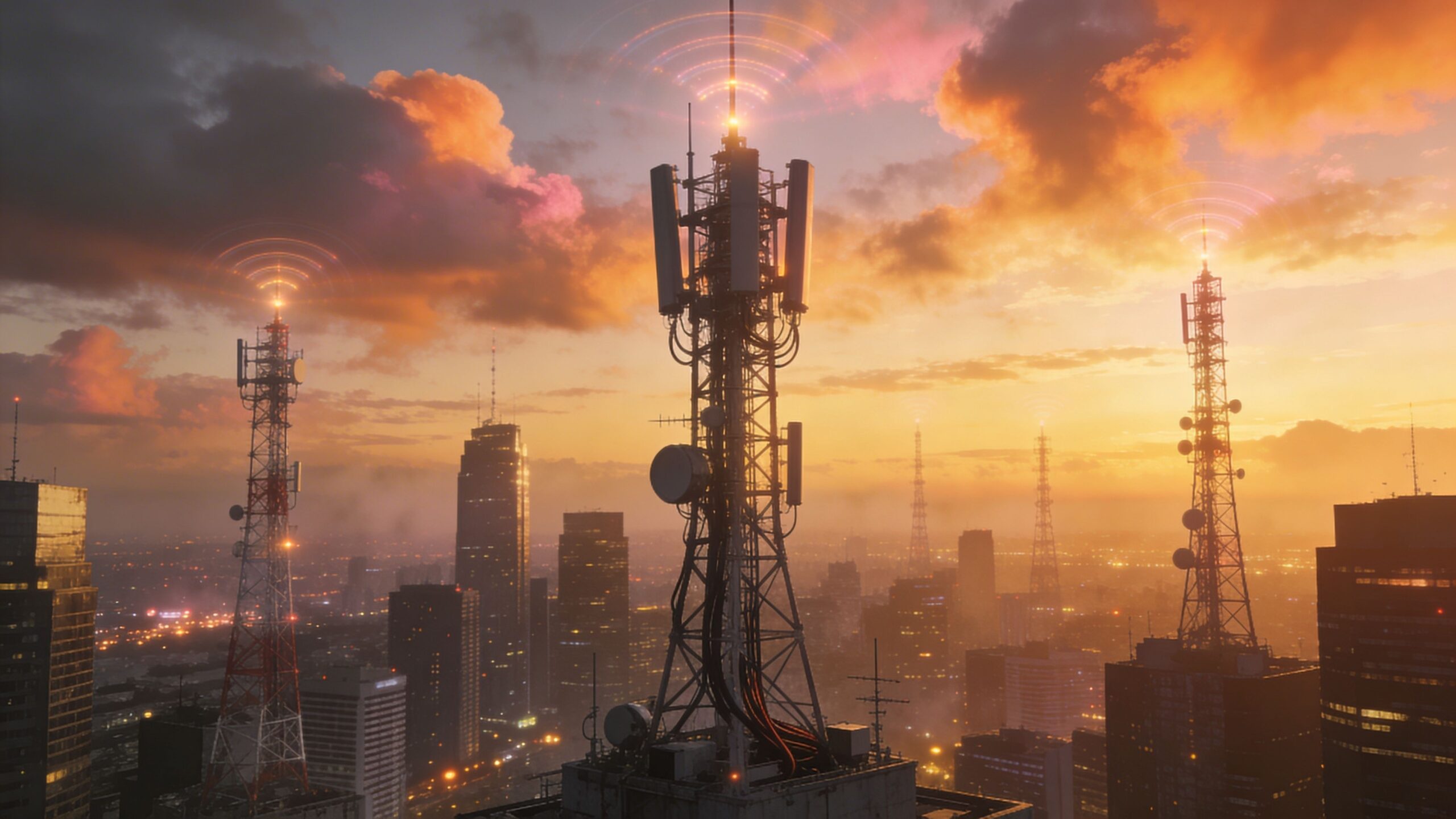
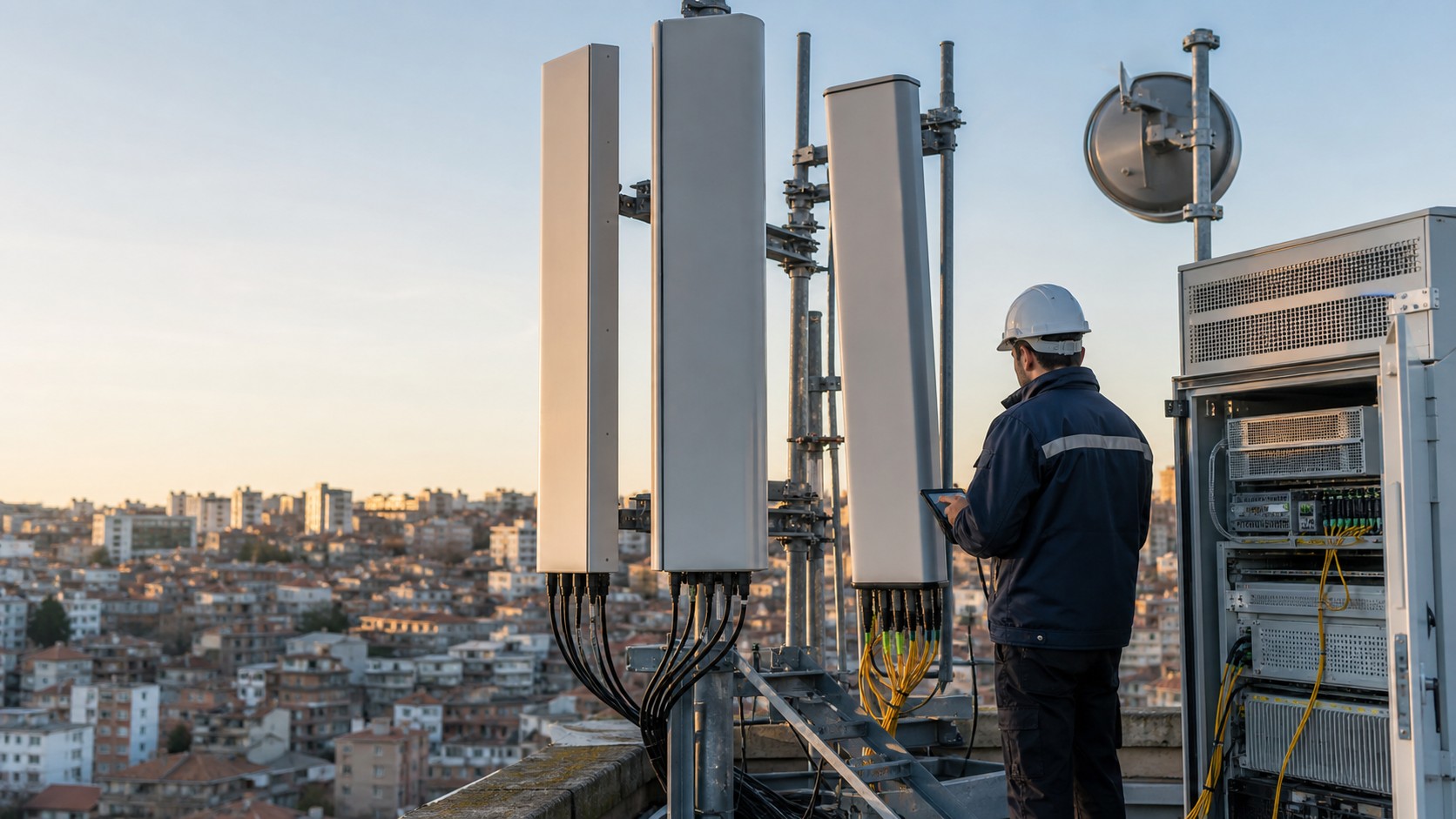
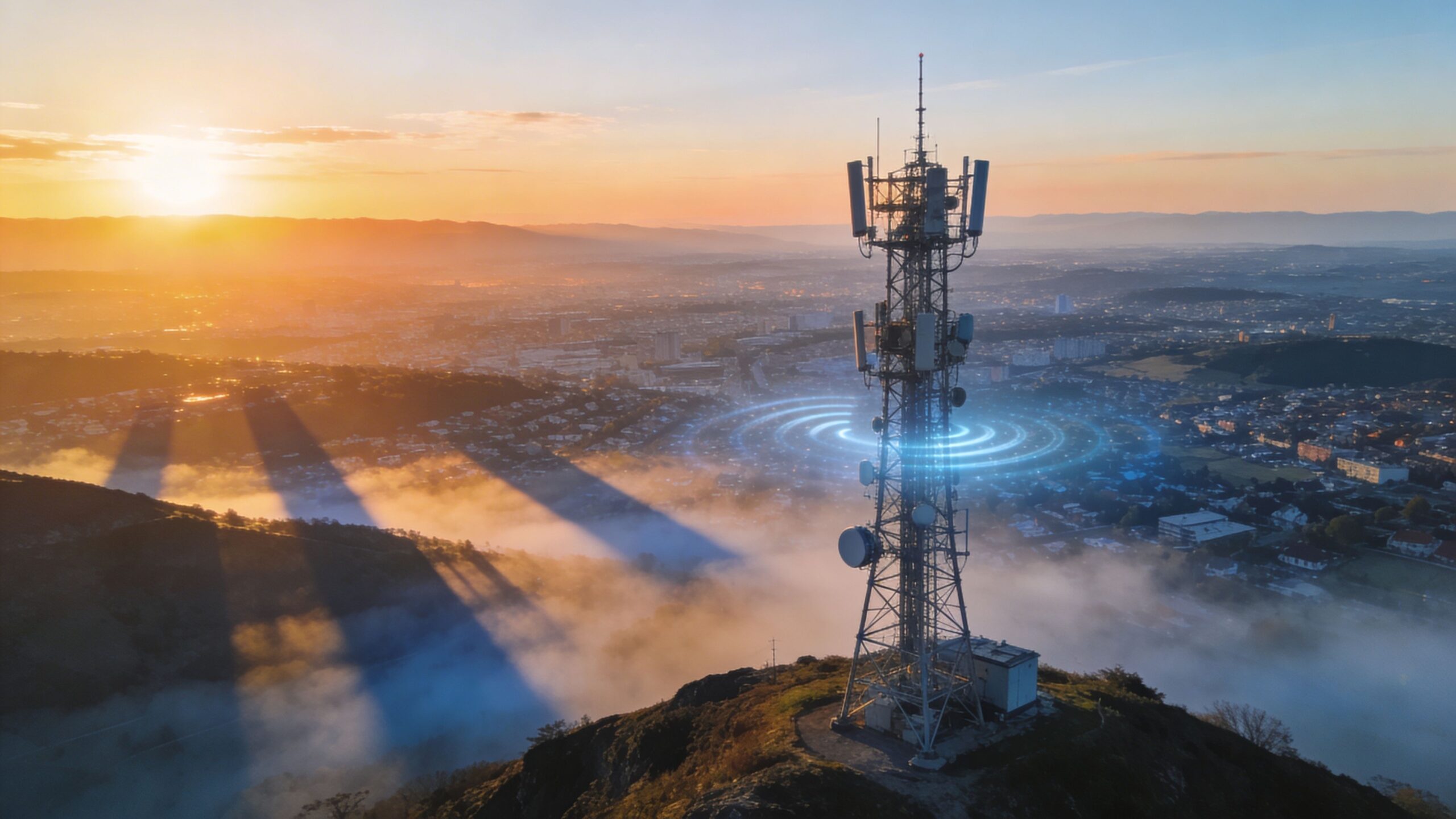
A typical macro cell site includes antennas, radios, power systems, and a connection back to the carrier network. The tall structure is mostly there for line-of-sight and coverage: higher antennas can “see” more area and can often reach devices over longer distances. But the real work happens in the radios and antennas that transmit and receive signals. Modern sites often use multiple antennas and advanced arrays that can handle many users at once. You may also see multiple sets of equipment on one tower because different carriers share infrastructure or because one carrier uses multiple frequency bands and technologies. The site is less like a single loudspeaker and more like a sophisticated conversation hub that schedules thousands of tiny exchanges every second.
Small Cells: Why Networks Are Getting Denser
In busy areas, carriers add small cells—compact base stations mounted on poles, rooftops, or street furniture. The purpose isn’t just coverage; it’s capacity. Because wireless bandwidth is shared, a single large cell can only serve so many users at high speeds. By shrinking cell size and adding more sites, the network spreads the load across multiple “neighborhood” connections.
Small cells are especially important for higher-frequency spectrum, which can carry more data but doesn’t travel as far. When a network is dense, your phone can connect to a nearby site with a strong signal, which improves speed and reduces the power needed for communication. The result is a network that feels faster and more responsive where people actually gather.
Spectrum: The Invisible Real Estate
Spectrum is the foundation of wireless communication. It’s the range of radio frequencies carriers are licensed to use, and it behaves differently depending on the band. Lower frequencies travel farther and penetrate buildings better, which makes them excellent for coverage. Higher frequencies can support wider channels and higher throughput, but they tend to have shorter range and can be blocked more easily by walls and other obstacles. This is why your experience changes from one place to another. A rural highway might rely heavily on lower bands for broad reach. A downtown corridor might use mid-band or high-band spectrum with dense sites for capacity. Your phone is constantly selecting the best combination available, often using more than one band at a time when the network supports it.
How Your Phone Finds a Network
Your phone doesn’t just “connect” once and forget it. It constantly listens to the air for control signals that cell sites broadcast. These signals tell devices what network is available, what frequencies are in use, and how to request access. Your phone measures signal quality, not just raw strength, because a strong signal with heavy interference can still perform poorly.
Once your phone chooses a cell, it synchronizes timing so transmissions line up correctly. Then it begins the process of registering on the network, which includes identity checks. That registration is why you can move from place to place and still remain reachable: your network always knows roughly which cell you’re in, so it can route calls and data to you.
Authentication: The SIM’s Quiet Superpower
Your SIM or eSIM is more than a subscriber card. It stores credentials that prove you’re allowed to use the network and helps establish encryption keys for secure communication. When your phone attaches to the network, the carrier’s systems verify those credentials and negotiate the security context needed to protect the connection. This step is one reason cellular networks can feel “cleaner” than open Wi-Fi. Your identity and access are controlled by the carrier, and the connection over the air is typically encrypted as part of normal operation. The network can also apply policies tied to your plan, like hotspot permissions or data prioritization, without forcing you to log in.
The Radio Link: How Signals Carry Data
When you browse the web, your phone isn’t sending a continuous stream like a garden hose. Modern cellular networks schedule communication in tiny time-and-frequency chunks. The cell site assigns your device specific resources for a brief moment, then assigns resources to someone else, then back to you—rapidly and repeatedly. This scheduling is how thousands of devices share the same spectrum without chaos.
Networks also adapt the signal to match conditions. If you’re close to the site with a clean signal, the network can use more efficient modulation to push more data per second. If you’re farther away or inside a building, the network may switch to a more robust method that carries less data but holds up better against noise and interference. That adaptability is a big part of why cellular networks remain usable across wildly different environments.
Data as Packets: Your Phone’s Internet Journey
Once your data leaves the radio link, it becomes network traffic like any other internet data. Your phone sends packets to the cell site, which forwards them into backhaul—high-capacity transport links such as fiber or microwave. From there, traffic enters the carrier’s core network, which assigns your phone an IP address and routes your packets to the correct destination on the internet. If you’re opening a website, your request travels to a server somewhere, then response packets travel back. If you’re streaming video, your phone receives a steady flow of packets that it buffers to avoid stutter. Much of what you perceive as “speed” is actually the smooth coordination of radio scheduling, backhaul capacity, and the performance of the server you’re contacting.
Backhaul: The Hidden Bottleneck
People often assume the tower is the limiting factor, but backhaul can be the real speed ceiling. A site with great radio coverage can still feel slow if its connection to the core network is limited or congested. Fiber backhaul is typically the strongest option because it offers huge capacity and low delay, but it’s expensive to deploy everywhere.
In some regions, microwave backhaul is used to bridge distances quickly, especially in rural terrain. It can work very well, but like any shared resource, it has capacity limits. When network performance varies dramatically despite similar signal strength, backhaul is often part of the story.
Handoffs: Staying Connected While You Move
One of the most impressive aspects of cellular technology is mobility. As you move, your phone constantly scans nearby cells and reports what it sees. The network uses that information to decide when to hand you off to a new cell. Done well, this switch is invisible: your call continues, your stream doesn’t stop, and your apps don’t notice. Handoffs must balance timing and stability. Switch too early and you may bounce between cells unnecessarily. Switch too late and your signal may fade before the new connection is ready. Networks tune these decisions carefully, and they use different strategies depending on whether you’re walking downtown or driving at highway speeds.
Why Signal Bars Don’t Equal Speed
Signal bars are a quick indicator of radio conditions, but they don’t measure congestion. You can have excellent bars and slow service if the cell is overloaded. You can also have fewer bars but decent performance if the site is quiet and your phone is using a clean band with strong backhaul.
Bars also don’t reveal what band you’re on, whether your phone is using multiple carriers at once, or whether it’s receiving interference. The real experience comes from a combination of radio quality, available spectrum, scheduling, and network load. This is why speed tests can swing wildly over short distances or different times of day.
Congestion: The Crowd Factor
Wireless networks are shared by design, so congestion is inevitable in high-demand environments. When many users connect to the same cell, the scheduler must divide resources among them. Networks try to keep things fair while also protecting time-sensitive services like voice calls and certain types of real-time traffic. Carriers manage congestion by adding spectrum, densifying with small cells, improving backhaul, and optimizing how resources are scheduled. Over time, newer technologies improve efficiency so that the same spectrum can carry more traffic. But the core reality remains: crowded airspace means each user gets a smaller slice in that moment.
LTE and 5G: Two Layers, One Modern Network
LTE is the technology that powered most of the 4G era and still forms a major coverage foundation in many networks. It’s efficient, mature, and widely deployed. 5G builds on that foundation by adding more spectrum options, more advanced antennas, and improved capacity, especially where networks are dense.
In many real-world deployments, your phone uses a blend of LTE and 5G. It may use LTE for control signaling while using 5G for higher-speed data. This layered approach helps carriers roll out 5G without breaking the reliability people depend on. The result is a network that evolves rather than abruptly replacing itself.
The Big Picture: A System Built for Motion and Scale
Cellular networks work because they’re engineered to make movement normal. They manage identity, security, scheduling, and routing so your phone can feel “always online” even though it’s constantly changing location, signal conditions, and nearby tower choices. When you understand the pieces—cells, spectrum, backhaul, and the core network—you can finally see why coverage and speed behave the way they do. Every time you refresh an app, you’re tapping into a global machine that operates at internet scale while adapting second by second to the real world. The more you learn about towers, signals, and data, the less magical it seems—and the more impressive it becomes.