5G in One Clear Idea
5G is the fifth generation of cellular network technology, designed to make wireless connections faster, more responsive, and more capable of handling huge crowds of connected devices. If 4G LTE made smartphones feel like they had broadband in their pockets, 5G aims to make wireless feel even closer to fiber—especially in places where networks are dense and well-equipped. But 5G isn’t one single “speed.” It’s a toolbox of upgrades: new spectrum bands, smarter antennas, more cell sites, and a modernized core network that can route traffic more efficiently. That’s why your 5G experience can range from “a bit better than LTE” to “shockingly fast,” depending on where you are and how the network around you is built.
A: The tower may be congested or the signal quality may be poor.
A: No. It depends on band, coverage, device support, and network load.
A: Sometimes, especially if the old phone lacks important bands.
A: A handoff, weak coverage edge, or congestion can interrupt the session.
A: Wi-Fi calling, better carrier coverage, or a properly installed signal solution may help.
A: It uses wireless access, but the plan and equipment are designed for home broadband.
A: Networks often allocate more capacity to download demand.
A: Only partly. Local coverage and congestion matter most.
A: Coverage, failover, voice quality, latency, and support response.
A: The one that performs reliably where you actually use it.
The Problem 5G Was Built to Solve
Mobile data demand has grown faster than almost any other category of internet usage. Video streaming, cloud apps, real-time navigation, remote work, and always-on social platforms push networks hard—especially in city centers, stadiums, airports, and dense neighborhoods. LTE can still deliver strong performance, but capacity becomes the challenge when thousands of users fight for a limited slice of spectrum.
5G tackles this by increasing total network capacity and efficiency, not just peak speed. In plain terms, it’s built to serve more people at once, in more places, with less lag. That extra capacity is what makes 5G meaningful long-term: it’s designed for a world where everything connects, not just phones.
How 5G Works
At a high level, 5G works the same way every cellular system does: your phone connects by radio waves to a nearby cell site, then your traffic moves through backhaul links into a carrier’s core network, and finally out to the internet. The difference is the radio technology and the network architecture behind it, which are engineered to move more data with smarter coordination. 5G can use wider channels of spectrum and more advanced methods of splitting and scheduling wireless resources. That means the network can push more data through the air at once and can respond faster when many devices are competing for service. In the best conditions, 5G can deliver high throughput and low latency that make apps feel instantly reactive.
5G Spectrum: Low Band, Mid Band, and High Band
5G operates across a range of frequency bands, and each one behaves differently in the real world. Low-band 5G travels far and penetrates buildings well, making it great for broad coverage, but it often delivers speeds closer to high-quality LTE because the channels are typically narrower.
Mid-band 5G is the sweet spot for many networks: it offers strong speeds while still covering a decent area. This is where many people see the most noticeable everyday improvement—faster downloads, smoother streaming, and better performance in busy zones. High-band 5G, often associated with millimeter wave, can be extremely fast but has limited range and struggles with obstacles like walls and even foliage, so it requires many small cells close together.
Why 5G Uses Small Cells
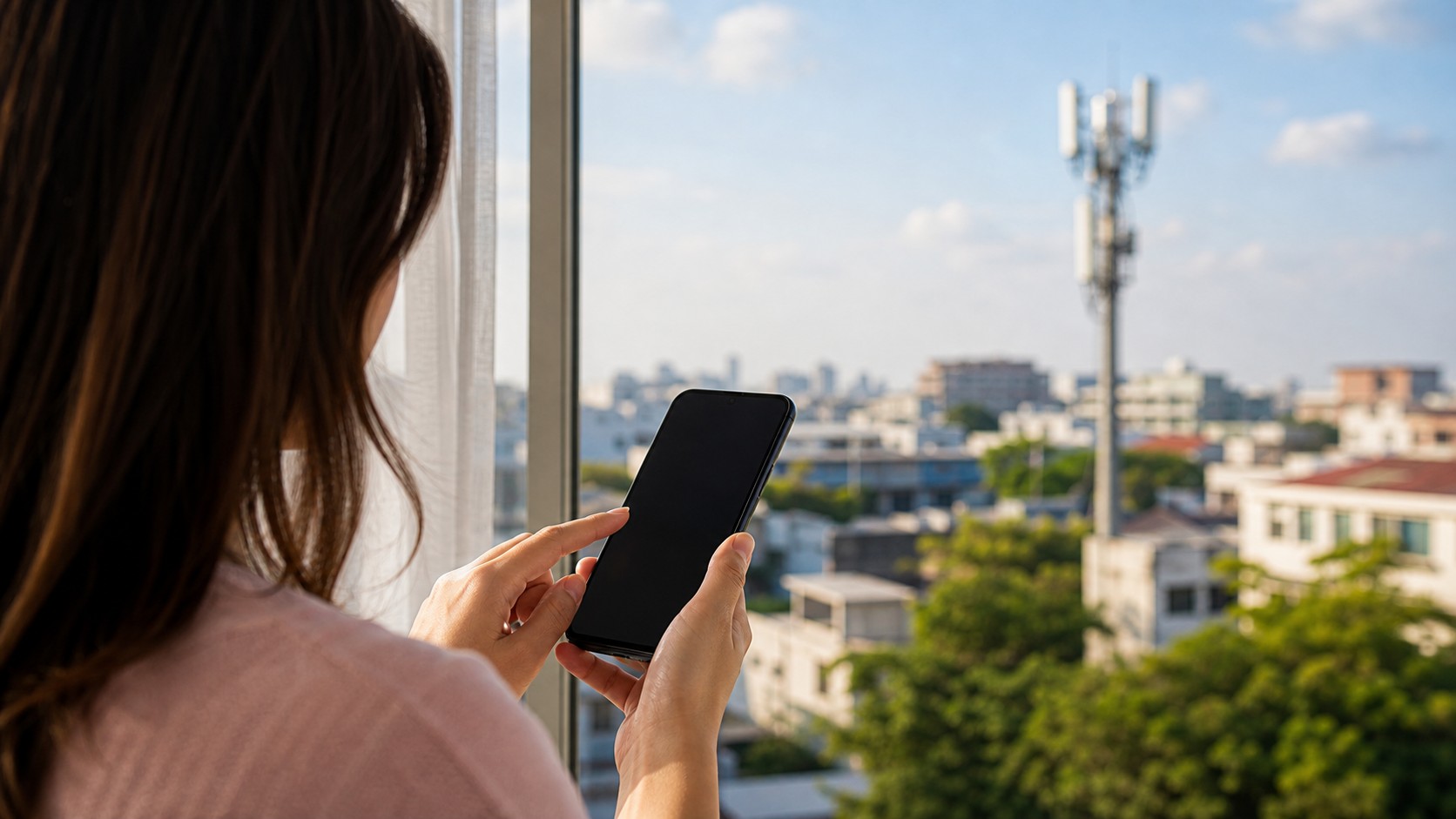
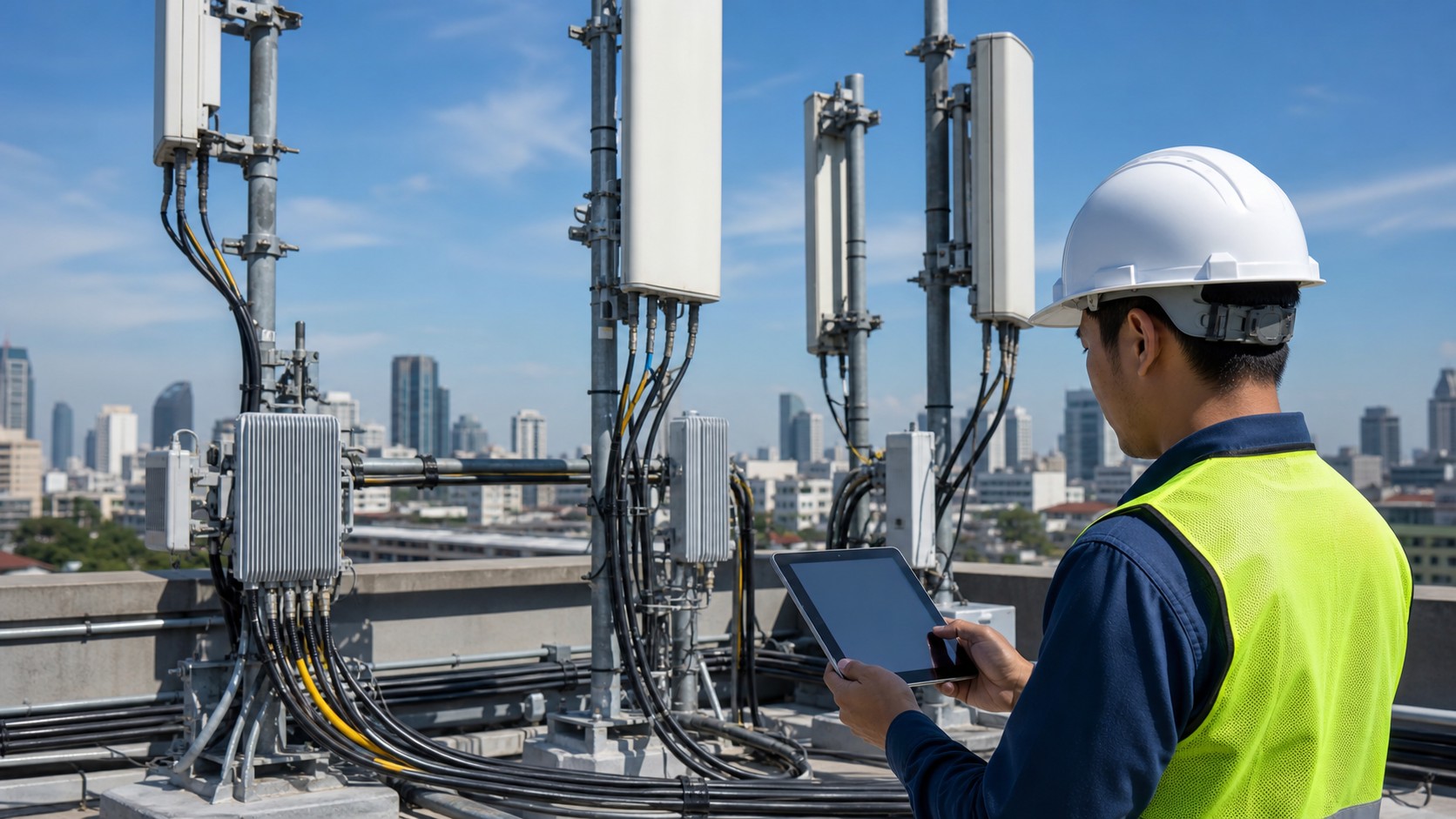
One of the most visible changes in 5G deployment is the rise of small cells—compact radio units placed on poles, rooftops, and street furniture. They bring the network closer to users, which increases signal quality and lets higher-frequency spectrum be used effectively. Instead of relying only on tall towers covering huge areas, small cells densify the network so that capacity is distributed where people actually are. This is why 5G coverage can feel “patchy” in some cities. If small cells are installed along certain streets or neighborhoods, those areas can feel incredibly fast, while nearby blocks might fall back to LTE or a slower form of 5G. The network is expanding, but the density piece is what makes 5G shine.
Massive MIMO and Beamforming: The Secret Sauce
5G networks often use advanced antenna systems called massive MIMO, which means “multiple input, multiple output” with many antenna elements working together. Instead of broadcasting a signal in a broad, unfocused way, these antennas can shape and steer radio energy more precisely toward devices.
Beamforming is the technique that makes that focus possible. It helps improve signal quality, reduce interference, and boost capacity by directing energy where it’s needed rather than wasting it in all directions. In practical terms, it’s part of why 5G can work better in dense areas: the network can serve multiple users more efficiently and adapt to changing conditions in real time.
5G vs 4G LTE: What’s Actually Different
4G LTE is still a powerhouse, and in many places it remains the most consistent network layer. 5G builds on LTE’s success but adds improvements in capacity, spectrum usage, and network responsiveness. When people say “5G is faster,” they’re often talking about wider channels and better radio efficiency, but the more important change is how the network handles crowding. Latency improvements are another key difference. While LTE is already good for most tasks, 5G is designed to reduce delay further, which matters for real-time gaming, video calls, and interactive cloud apps. In ideal conditions, 5G can make the internet feel more immediate—less waiting, more instant feedback.
Standalone vs Non-Standalone 5G
Not all 5G networks are built the same way. Many early rollouts used what’s called non-standalone 5G, where LTE still handles parts of the connection while 5G provides a faster data layer. This approach speeds up deployment because carriers can reuse existing LTE infrastructure while expanding 5G coverage.
Standalone 5G is the more complete version, where 5G radios connect to a 5G core designed to support advanced capabilities like network slicing and more flexible traffic management. Standalone can improve performance, efficiency, and future readiness, but it takes time and investment to roll out widely.
What “5G Ultra Wideband” and Similar Labels Usually Mean
Carriers often market different flavors of 5G using brand names, which can be confusing. Typically, these labels indicate the type of spectrum and network configuration being used. A “premium” label often suggests faster mid-band or high-band service, while basic “5G” branding might include low-band coverage that behaves more like LTE in everyday speed. The real takeaway is that your experience depends on spectrum and density more than the icon on your phone. Two neighborhoods can both show 5G, but one might be powered by wide mid-band channels and small cells, while the other relies on low-band coverage designed mainly to extend reach.
Why 5G Speeds Vary So Much
5G speed depends on signal strength, spectrum type, network load, and how much backhaul capacity the cell site has. Even with great radio conditions, a busy cell can slow down because everyone is sharing. That’s not a failure of 5G—it’s the reality of shared wireless—but 5G is designed to scale better under those crowds than LTE.
Physical environment also matters. High-band 5G can be incredibly fast on an open street but may fade indoors or around corners. Mid-band performs better across blocks and through some walls, while low-band travels far but may not deliver dramatic speed jumps. Your phone is constantly choosing the best option it can see.
Latency: The Part of 5G You Feel More Than You Measure
Download speed makes headlines, but latency is what makes apps feel alive. Lower latency means quicker reactions: pages begin loading faster, maps update more smoothly, and multiplayer games feel tighter. For video calls, lower latency helps conversations flow naturally with fewer awkward delays. 5G aims to reduce latency by improving radio efficiency and modernizing network routing. In some deployments, edge computing is added so that data doesn’t have to travel as far to reach the service you’re using. When that happens, the internet can feel surprisingly immediate—like your phone is closer to the cloud.
5G for Homes: Fixed Wireless Access
One of the most practical and fast-growing uses of 5G is fixed wireless access, which delivers home internet through cellular networks instead of cables. A 5G receiver or router connects to a nearby cell site and then broadcasts Wi-Fi inside your home. In areas where fiber is unavailable or slow to arrive, 5G home internet can be a strong alternative.
Performance depends heavily on local network conditions and signal quality, but when mid-band or high-band capacity is strong, fixed wireless can deliver impressive speeds. It’s also a major reason carriers invest in 5G capacity: serving homes requires steady throughput, not just quick bursts.
5G and the Internet of Things
5G isn’t just for phones. It’s designed to support huge numbers of connected devices, from sensors and meters to industrial systems and smart infrastructure. Some of this happens through specialized cellular technologies optimized for low power and long battery life, while other uses demand high reliability and low latency. As cities and industries add connected devices at scale, networks need to handle many small connections without falling apart. 5G expands that capability, making “always connected” a realistic expectation for far more than consumer electronics.
Industry, Private 5G, and the Big Use Cases
Beyond consumer devices, 5G is built for enterprise and industry. Private 5G networks can be deployed in factories, ports, hospitals, campuses, and warehouses, offering reliable wireless connectivity with controlled performance and security. These networks can support automation, robotics, real-time monitoring, and high-density connectivity in environments where Wi-Fi can struggle.
Some of the most exciting 5G stories aren’t about downloading a movie faster—they’re about redesigning how systems communicate in real time. When machines can coordinate instantly and reliably, industries can operate with more precision, safety, and flexibility.
Is 5G Safe? Clearing Up Common Concerns
5G uses radio frequencies, the same general category of non-ionizing electromagnetic energy used by previous generations of cellular, Wi-Fi, radio, and television. Deployment changes the types of spectrum used and increases network density in some areas, which is why it attracts attention. Safety standards and regulatory limits exist for radio emissions, and real-world deployments are engineered to operate within those limits. If you’re evaluating claims online, the most useful habit is to separate “how 5G works” questions from “what standards and measurements say” questions, and to rely on reputable scientific and regulatory sources rather than viral summaries.
What You Need to Use 5G
To use 5G, you need a 5G-capable device and a carrier plan that includes 5G access. Your phone also needs to support the frequency bands used by your local carrier, which can matter if you’re buying unlocked devices or traveling internationally.
Even with the right device, 5G availability depends on coverage in your area. In many places, your phone will move seamlessly between LTE and 5G depending on signal and network conditions. That switching is normal, and it’s part of how carriers maintain consistent connectivity while expanding new infrastructure.
The Bottom Line: What 5G Really Means
5G is a major upgrade to mobile networks, built to deliver more capacity, better responsiveness, and stronger performance in crowded environments. Some people experience it as a dramatic speed boost, while others see a steadier, incremental improvement—both can be true depending on spectrum and infrastructure where they live. The most important idea is that 5G is a platform, not a single number on a speed test. It’s shaping how phones connect today, how homes get internet, and how industries build the next generation of connected systems. As coverage expands and standalone networks mature, the “real” 5G experience will keep improving—quietly, block by block, and at global scale.