The Best Phone Under $500 Is the One With the Right Compromises
A great smartphone under $500 is not a flagship pretending to be cheap. It is a phone that protects the features most people notice every day: battery life, display quality, camera reliability, software updates, carrier support, storage, durability, and smooth performance. Budget phones have improved so much that many buyers no longer need a premium model, but the category still requires careful tradeoffs. The best choice depends on whether you care most about photos, gaming, long updates, clean software, screen quality, or the lowest possible monthly cost.
A: Yes if you want flexibility, but confirm carrier support first.
A: Choose more if you keep photos, video, games, or the phone for years.
A: It is useful, but strong LTE can still be enough in some areas.
A: They help, but battery, camera, updates, and modem support matter too.
A: Replace it when battery, security updates, performance, or network support no longer fits.
A: Many are, especially when they have clean software and long update support.
A: No. Processing, stabilization, and lens quality matter.
A: Most users benefit more from reliable battery life.
A: Sometimes, if it supports better bands for that carrier.
A: A phone with broad carrier support, good updates, and enough storage.
Start With the Compromise You Can Live With
Every phone under $500 makes tradeoffs. The smart move is to choose which tradeoff matters least to you. One phone may have the best camera but slower charging. Another may have excellent battery life but a weaker processor. A third may promise long updates but use a less premium body.
That is not a failure of the category. It is the point of value buying. You are looking for the phone that protects your daily experience while trimming features you do not need. The wrong budget phone is the one that saves money in the area you care about most.
Before comparing models, rank your priorities. Camera, battery, updates, display, gaming, size, and carrier support should not all have equal weight.
Battery Life Is a Value Feature
Battery life is one of the most important budget-phone features because it affects every user every day. A phone that lasts comfortably through school, work, errands, and evening use feels more expensive than it is. A phone that needs constant charging feels cheap no matter how good its spec sheet looks.
Look beyond battery capacity. Efficiency, screen brightness, processor behavior, modem performance, and software tuning all affect endurance. A large battery paired with inefficient hardware may not beat a smaller battery in a better-tuned phone.
Charging speed is useful, but it should not replace endurance. Fast charging helps when you forget to plug in. Strong battery life helps all day.
Camera Quality Is About Consistency
Budget phones often advertise multiple cameras, but not every lens is equally useful. A strong main camera with reliable processing is better than a cluster of weak macro, depth, or low-resolution auxiliary cameras. Buyers should look for consistent results, not camera-count theater.
Daylight photos are easier. Low light, moving subjects, indoor scenes, video stabilization, skin tones, and shutter speed reveal the real differences. A phone that captures children, pets, food, documents, and travel scenes reliably is more useful than one that only looks sharp in perfect conditions.
If camera quality is your top priority, read reviews that include sample photos in difficult situations. The best budget camera is the one that misses fewer everyday moments.
Software Updates Protect the Purchase
A phone's value depends on how long it remains secure and pleasant to use. Updates patch vulnerabilities, fix bugs, improve compatibility, and sometimes add features. A cheap phone with poor support can become expensive if it feels outdated too soon.
Update promises vary by brand and model. Some under-$500 phones now offer surprisingly long support, while others still lag behind. Buyers should check both operating system updates and security updates. They are related but not identical.
Long support is especially important for parents, students, business users, and anyone planning to keep the phone for several years. A budget phone should not become disposable after one season.
Performance Should Match the User
Most modern midrange phones are fast enough for messaging, browsing, maps, streaming, email, and social apps. The performance question becomes more important for gaming, video editing, heavy multitasking, AI tools, and people who keep many apps open.
Do not judge performance only by the processor name. Storage speed, RAM, thermal behavior, software weight, and update quality all affect how a phone feels. A well-optimized midrange chip can feel better than stronger hardware buried under poor software.
If gaming matters, look for sustained performance and heat notes. If daily smoothness matters, read long-term impressions. A phone should still feel responsive after months of photos, apps, updates, and background services.
Carrier Compatibility Can Make or Break the Deal
An unlocked phone is not useful if it lacks the bands or certification needed for your carrier. This is especially important in the United States, where carrier support, 5G bands, Wi-Fi calling, voicemail, and activation rules can vary. A bargain import can become frustrating if network support is incomplete.
Before buying, check the exact model number against the carrier. Do not assume a phone with the same marketing name is identical in every region. Bands, eSIM support, warranty, and software can differ.
Carrier deals also deserve scrutiny. A phone advertised as cheap may require a long plan commitment, trade-in, new line, or bill credits. The device price and service cost should be evaluated together.
New Budget Phone or Used Flagship?
A used flagship can offer premium cameras, faster chips, better materials, or extra features for less money. That can be a smart buy when the device is in excellent condition and still has update support. It can also be risky if battery health is poor or repairs are expensive.
A new budget phone usually offers warranty coverage, a fresh battery, predictable ownership history, and often longer remaining support. It may lack some premium touches, but it starts clean. For many buyers, that peace of mind matters.
The choice depends on risk tolerance. Enthusiasts may enjoy hunting for used flagship value. Most everyday buyers may prefer a new phone that is supported, returnable, and simple to activate.
How to Build a Shortlist
Start by eliminating phones that fail your must-have requirements. If you need a reliable camera, remove models with weak photo reviews. If you need long support, remove models with vague update policies. If you need a specific carrier, remove incompatible versions.
Then compare the remaining phones by daily comfort: battery, display, storage, size, durability, charging, and software feel. At this price, a balanced phone is often better than a phone with one flashy feature and several annoying weaknesses.
Finally, check real purchase terms. A phone under $500 should still include the correct model, warranty, return window, and enough storage. A good deal is not only a low checkout price. It is a phone you can live with.
The Practical Under-$500 Takeaway
The best smartphones under $500 are no longer consolation prizes. Many are good enough for years of daily use, especially when buyers choose around their real priorities. The category is strong because midrange chips, displays, cameras, batteries, and update policies have improved.
Still, careful comparison matters. Budget phones differ sharply in camera consistency, software support, carrier compatibility, storage, durability, and gaming performance. The wrong compromise can become irritating quickly.
Buy the phone that protects your non-negotiables. If it has enough battery, a dependable camera, long updates, compatible bands, and comfortable performance, it has done the budget-phone job well.
The Best Pick Depends on Ecosystem
Budget buyers often focus on hardware, but ecosystem matters too. A household already using iMessage, FaceTime, AirTags, Apple Watch, or shared iCloud storage may value an affordable iPhone differently from a spec-heavy Android model. An Android user invested in Google services, Samsung wearables, or Windows integration may make the opposite choice.
This does not mean one ecosystem is universally better. It means switching costs are real. Contacts, photos, subscriptions, chargers, accessories, family settings, and app purchases can all affect the final value of a phone.
A smart under-$500 list should therefore include buyer types, not only hardware winners. The best phone for a student, parent, creator, gamer, and business user may differ even at the same price.
Display Quality Is More Than Refresh Rate
High refresh rate is nice, but it is not the only display factor. Brightness, color quality, viewing angles, touch response, outdoor readability, PWM sensitivity, glass durability, and resolution all shape daily use. A cheap high-refresh panel can still disappoint if it is dim or poorly calibrated.
The display is the part of the phone users touch and stare at every day. It affects reading, navigation, video, photos, gaming, and accessibility. Budget buyers should not ignore it just because the processor or camera gets more attention.
If possible, view the phone in person or read reviews that measure brightness and display behavior. A good screen makes a budget phone feel better every hour.
Do Not Ignore Repair and Accessories
A phone under $500 can become expensive if the screen is costly to replace, cases are hard to find, or the battery cannot be serviced reasonably. Popular models often have better accessory ecosystems and repair options. Obscure bargains may be harder to support.
Cases, screen protectors, chargers, cables, car mounts, and replacement parts all affect ownership. A phone with a slightly higher purchase price may be cheaper over time if it is easier to protect and repair.
This is especially important for families buying several devices. Durability and accessory availability can save more money than a small discount at checkout.
How to Avoid Deal Traps
Under-$500 phone pricing can be slippery. A deal may require a new line, expensive plan, trade-in, financing agreement, or bill credits spread over many months. The advertised phone price is only one part of the total cost.
Unlocked pricing is easier to compare, but carrier deals can still be worthwhile if the plan already fits your needs. The mistake is accepting a costly service commitment just to make the device look cheap.
Calculate the total ownership cost: phone, plan, taxes, fees, case, storage tier, warranty, and likely replacement timing. A real bargain remains a bargain after the fine print is included.
Who Should Spend More Than $500
Some buyers should still spend more. If you need the best zoom camera, premium video tools, heavy gaming performance, satellite features, titanium or specialty materials, advanced desktop modes, or maximum storage, a flagship may justify the price. Budget phones are strong, but they are not magic.
The question is whether the premium feature will be used often enough to matter. Paying hundreds more for a camera feature you rarely use is wasteful. Paying more for a tool that supports your job, creative work, or accessibility needs can be sensible.
A budget ceiling is helpful, but it should not be a trap. Spend under $500 when the phone meets the real need. Spend more only when the missing feature would be felt every week.
Used, Refurbished, and Open-Box Options
The under-$500 market includes new budget phones, discounted older flagships, refurbished devices, and open-box deals. Each category has different risk. New phones offer clean batteries and warranties. Refurbished phones can be excellent if the seller is reputable. Random used listings require more caution.
Check return windows, battery health, activation locks, water damage, carrier lock status, and update eligibility. A device that cannot activate properly or no longer receives updates is not a good bargain.
For most buyers, certified refurbished or reputable retail open-box deals are safer than private listings. The price may be slightly higher, but the reduced risk can be worth it.
A Practical Shortlist Strategy
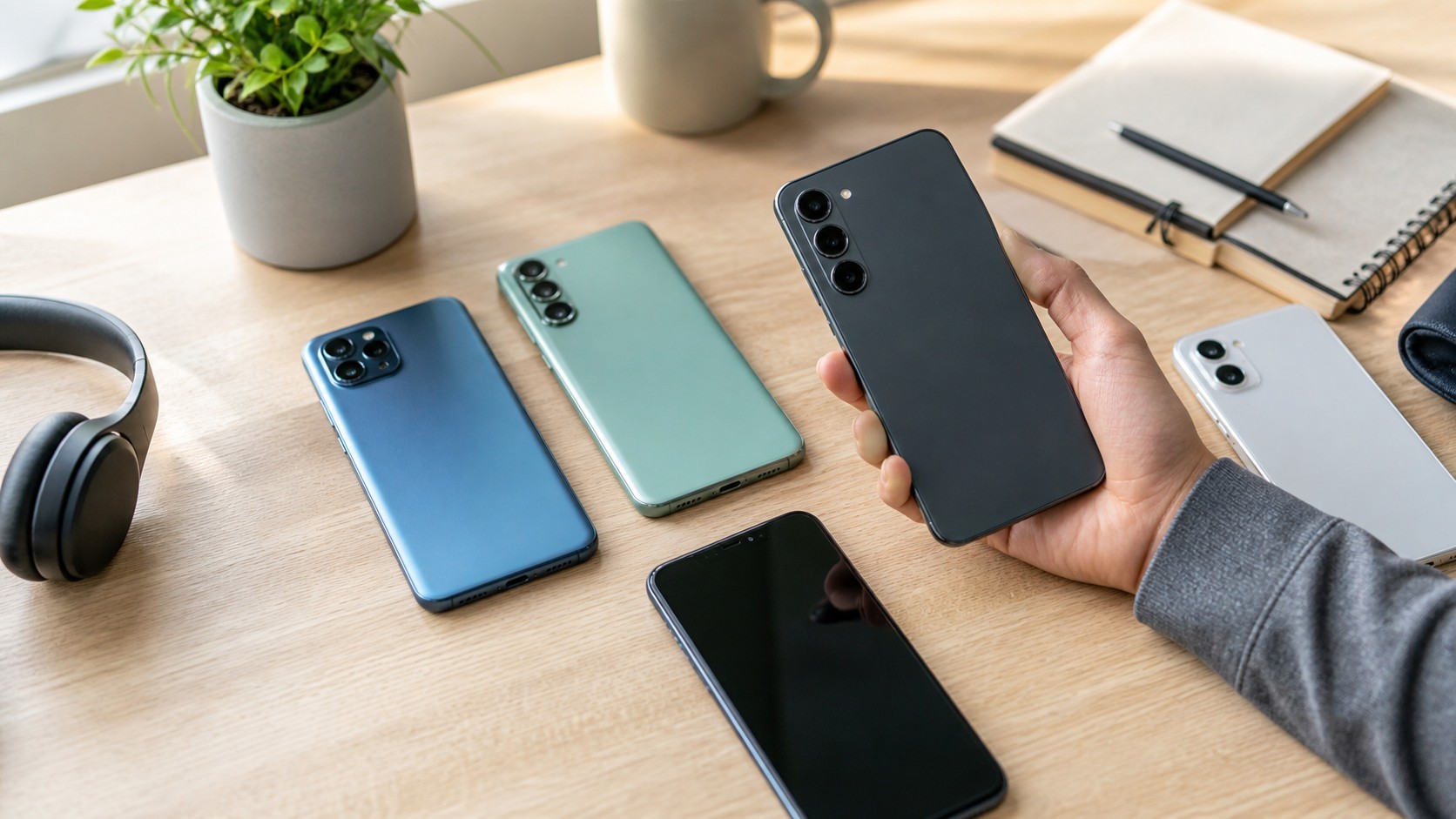
Build a shortlist of three phones instead of chasing every model. Pick one camera-first option, one battery/update-first option, and one performance/value option. Then compare them against your carrier, storage needs, size preference, and return policy.
This keeps buying from becoming noise. The under-$500 category is crowded, and many phones look similar in spec tables. A shortlist based on roles makes the decision calmer and more useful.
Once the shortlist is set, wait for normal sales if timing allows. Budget phones often move in price, and a modest discount can make the best option fit comfortably under the limit.