The Fastest Smartphone Is the One That Stays Fast After the First Burst
Smartphone speed is not a single benchmark score. The fastest phones combine a powerful chipset, fast memory and storage, efficient cooling, responsive software, strong graphics performance, battery management, and wireless stability. A phone can win a short benchmark and still slow down during a long gaming session or video export if heat builds up. A useful performance ranking should look at burst speed, sustained speed, everyday responsiveness, camera processing, gaming, AI features, and how the phone behaves after months of updates.
A: Yes if you want flexibility, but confirm carrier support first.
A: Choose more if you keep photos, video, games, or the phone for years.
A: It is useful, but strong LTE can still be enough in some areas.
A: They help, but battery, camera, updates, and modem support matter too.
A: Replace it when battery, security updates, performance, or network support no longer fits.
A: Many are, especially when they have clean software and long update support.
A: No. Processing, stabilization, and lens quality matter.
A: Most users benefit more from reliable battery life.
A: Sometimes, if it supports better bands for that carrier.
A: A phone with broad carrier support, good updates, and enough storage.
Peak Scores Are Only the Opening Round
A benchmark score can be useful because it gives reviewers a repeatable way to compare devices. It can show how a processor behaves in a controlled test and whether a phone belongs in the flagship, midrange, or budget performance tier. The problem is treating that one number as the whole story.
Many phones perform extremely well for a short run. Then heat builds, clocks drop, and the phone settles into a lower sustained level. That second phase matters for gaming, video editing, navigation on a hot dashboard, long camera sessions, and heavy multitasking.
The fastest phone is not only the one that sprints. It is the one that can keep moving without becoming uncomfortable, unstable, or battery-hungry.
Chipset Power Still Matters
The processor remains central to smartphone speed. CPU cores affect app launches, web rendering, export times, and general responsiveness. GPU power affects games, animation, high-refresh displays, and visual effects. Neural processing hardware increasingly affects AI tools, photo features, transcription, and on-device assistance.
Current flagship chips from companies such as Apple, Qualcomm, MediaTek, and others push mobile performance far beyond what ordinary apps require. That headroom is useful for demanding users, but it also creates a problem for rankings: many premium phones feel fast in normal use.
That means testing has to look beyond opening apps. Heavy workflows reveal differences that casual swiping hides.
Thermals Separate Great Phones From Fast Chips
A powerful chip inside a poorly cooled phone can disappoint. Thin bodies, bright displays, waterproofing, battery density, and compact camera hardware leave limited room for heat. Manufacturers have to decide how aggressively a phone should run before it throttles.
Some phones use vapor chambers, graphite layers, metal frames, software tuning, or gaming modes to manage heat. Others choose quieter performance to preserve comfort and battery. Neither choice is automatically wrong, but it changes how the phone should be ranked.
A serious performance review should include repeated tests. One cold run says what the phone can do for a moment. A looped test says what it can keep doing.
Storage and Memory Affect Everyday Speed
People often focus on the processor and forget storage. Fast storage helps apps launch, games load, files copy, photos save, and system updates install. Slower storage can make a capable chip feel less responsive, especially as the phone fills up.
RAM matters for keeping apps available in the background. A phone with too little memory may reload apps frequently, interrupting workflows. More RAM does not automatically make every task faster, but it helps heavy multitasking and long-term smoothness.
Base storage tiers deserve attention. Some phones use different storage configurations across models, and the cheapest version may not perform like the version reviewers tested.
Gaming Is a Demanding Performance Test
Games stress the GPU, CPU, display, touch response, speakers, battery, cooling, and network connection at the same time. A phone that looks fast in a short benchmark may drop frames after twenty minutes of play. That is why gaming tests are useful even for people who do not play often.
Frame stability matters more than one high peak. A steady experience at a slightly lower setting can feel better than a phone that starts beautifully and then stutters. Heat comfort also matters because no one wants to hold a device that becomes unpleasant.
Gaming phones may win here because they are designed for cooling and sustained load. Mainstream flagships may still be better overall if the buyer also values cameras, size, updates, and durability.
Camera Speed Is Its Own Category
Modern cameras rely heavily on computation. When a user taps the shutter, the phone may combine frames, reduce noise, map depth, adjust color, stabilize video, and apply AI-assisted processing. That is performance work, not only photography.
A fast camera system captures quickly, processes without long waits, and stays responsive during bursts. This matters for children, sports, pets, concerts, travel, and any moment that does not pause for the phone. Slow processing can make an expensive phone feel clumsy.
Performance rankings should include camera responsiveness because many users stress the chip more through photography than through gaming.
Software Can Make Hardware Feel Better or Worse
Two phones with similar chips can feel different because software scheduling, animation tuning, background management, storage cleanup, and update quality differ. A phone that manages background tasks well may feel smoother than a phone with stronger raw specs but heavier software.
Updates also change performance over time. Brands that maintain software carefully can improve stability, fix battery drain, and tune new features. Poor updates can introduce lag or heat. Long-term support is part of performance because phones are used for years, not only review week.
This is why speed rankings should not ignore software reputation. Hardware starts the race, but software decides how the phone feels every day.
How to Read a Smartphone Speed Ranking
A good ranking should say what was tested. Was it CPU, GPU, storage, AI, battery life, gaming, camera processing, modem speed, or everyday responsiveness? A phone can win one category and lose another. A creator, gamer, commuter, student, and casual user may not need the same champion.
Look for sustained results, thermal notes, battery impact, storage configuration, and software version. Also check whether the tested phone is the same model sold in your region. Chipsets and storage options can vary by market.
The fastest phone for you is the one that makes your tasks feel instant without sacrificing the things you care about more.
The Practical Performance Takeaway
The best performance phones combine peak power, sustained cooling, fast storage, enough memory, polished software, responsive cameras, strong graphics, and efficient battery behavior. That is a long list because modern phone speed is a system, not a single chip.
If you play demanding games, edit video, use AI tools, or keep phones for many years, paying attention to performance is worthwhile. If your use is messaging, browsing, photos, navigation, and streaming, many midrange phones already feel fast enough.
A speed ranking should help you buy smarter, not chase numbers for their own sake. The real winner is the phone that stays quick in the work you actually do.
Modem Speed Is Not the Same as Phone Speed
A smartphone can have a fast processor and still download slowly if the cellular signal is weak or the network is congested. It can also have an excellent modem but feel sluggish if storage, software, or heat management is poor. Performance rankings should separate device speed from network speed.
Cellular and Wi-Fi tests are still useful because phones are communication devices. A fast phone should handle strong 5G, Wi-Fi 6E, Wi-Fi 7, Bluetooth accessories, and hotspot workloads well. But those results depend on local networks as much as the phone.
A careful review labels the test. App launch speed, gaming frame rate, export time, AI processing, storage copy, cellular download, and Wi-Fi throughput are different measurements. Combining them into one vague claim can mislead buyers.
Efficiency Is Part of Performance
A phone that completes a task quickly but drains the battery heavily may not be the best real-world performer. Efficiency matters because mobile devices run on limited energy and often operate away from chargers. The fastest useful phone is quick without wasting power.
Chip manufacturing process, display technology, modem behavior, background management, and cooling all influence efficiency. A phone can feel fast for the first week and frustrating later if battery life collapses under normal use.
This is why battery testing belongs in performance reviews. Speed without endurance is only half a victory. Users need a phone that remains responsive late in the day.
AI Workloads Are Changing Speed Tests
On-device AI features are making performance harder to rank. Photo editing, transcription, live translation, summarization, voice cleanup, object removal, and assistant features may use neural processors, GPUs, CPUs, memory, and cloud connections in different ways.
Some AI tasks run locally, some use the cloud, and some mix both. A phone with excellent local AI hardware may respond faster or preserve privacy better for supported tasks. Another phone may rely more heavily on server-side processing and still produce excellent results.
Future speed rankings will need to show which AI tasks were tested and whether they ran on-device. A generic benchmark score will not capture that experience by itself.
Longevity Belongs in the Ranking
A performance ranking should consider how long the phone stays fast. Software updates, storage headroom, thermal design, battery aging, and memory capacity all affect year-two performance. A phone that wins on launch day but ages poorly may not be the best buy.
Update policies are part of this calculation. A phone with long support can receive optimizations, security patches, and compatibility improvements. A phone with weak support may feel abandoned even if its hardware remains capable.
For buyers who keep phones three or four years, sustained value matters more than a single early benchmark. The fastest phone should still feel good after real life fills it with photos, apps, messages, and updates.
How Reviewers Should Test Fairly
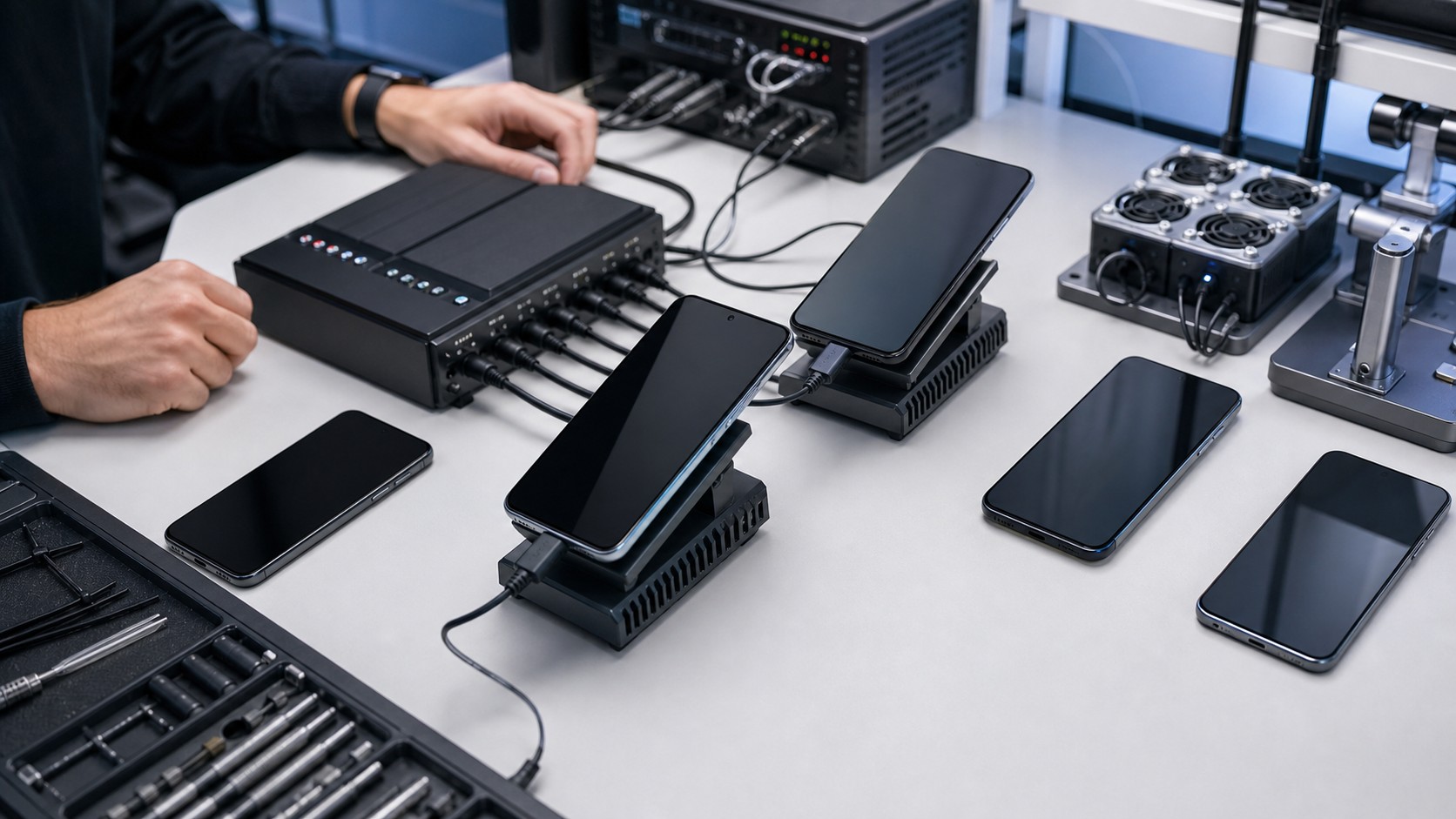
Fair testing starts with controlled conditions. Phones should be updated, charged similarly, cooled to a comparable starting temperature, and tested on the same storage tier where possible. Background apps, display brightness, and performance modes should be documented because they can change results.
A useful test set includes short benchmarks, repeated benchmark loops, gaming sessions, camera processing, video export, app launches, storage transfers, battery drain, and surface temperature. No single test captures the whole device.
Reviewers should also disclose region and configuration. A phone sold with a different chipset, modem, storage type, or RAM amount may not perform like the tested model. Buyers need to know whether the result applies to the device they can actually buy.
Why Everyday Speed Is Hard to Measure
Everyday speed is partly objective and partly perceptual. App launch times can be measured, but smoothness also depends on animations, touch latency, refresh rate, memory behavior, and whether the phone hesitates during transitions. A device can score well and still feel uneven.
Users also have different patience thresholds. A creator exporting video notices delays that a casual texter never sees. A gamer notices frame drops that a commuter using maps may not care about. Rankings become more useful when they explain who the speed is for.
That is why the best performance articles avoid one universal crown. They show category winners: fastest burst, best sustained gaming, best camera processing, best efficiency, best value performance, and best long-term smoothness.
Buying for Speed Without Overbuying
Many buyers do not need the absolute fastest phone. Messaging, browsing, maps, streaming, banking, photos, and social apps run well on many midrange devices. Paying for top performance makes sense when the workload is heavy or the phone will be kept for several years.
If speed matters, buy enough storage and memory, not only the top chip. A base model with limited storage can become cramped quickly. A phone with strong cooling and updates may age better than a thinner device that posts a higher first-run score.
The goal is performance confidence. You want the phone to stay responsive under your actual use, not simply win a chart you never stress again.