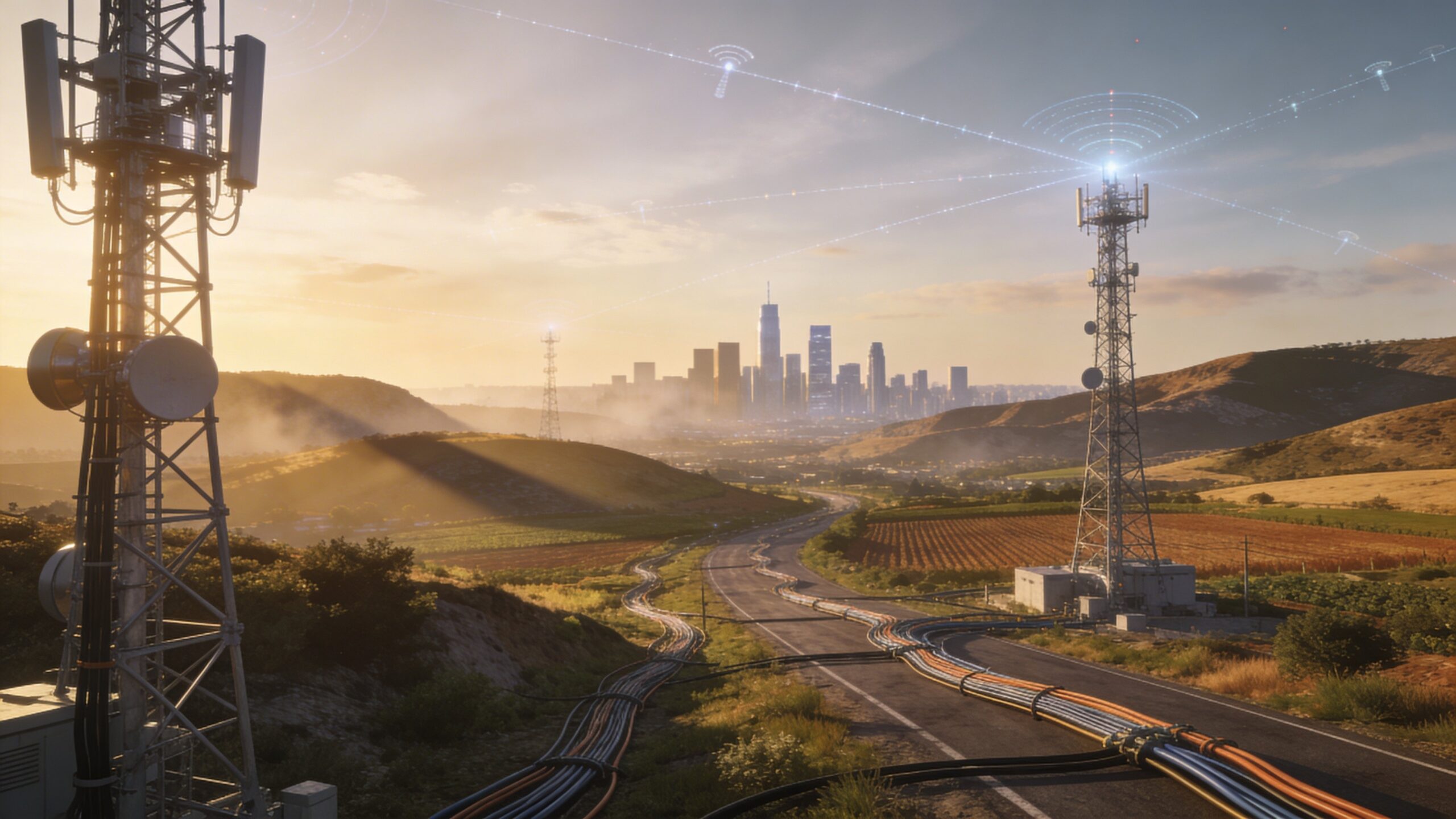
A Defining Moment for Modern Telecom
The telecom industry is no longer just the sector that keeps phones connected. It has become one of the central operating layers of the digital economy, supporting cloud applications, remote work, industrial automation, mobile commerce, streaming, connected vehicles, and the fast-growing ecosystem of intelligent devices. Industry research published in 2026 points to a market entering a new phase, where the biggest opportunities are less about simply adding more subscribers and more about building smarter, more programmable, more efficient networks that can support new services and new business models. GSMA Intelligence’s 2026 trend outlook centers the year on 5G transformation, spectrum, IoT and enterprise growth, digital consumer shifts, and fixed-network evolution, while Ericsson and ITU both frame connectivity as an increasingly essential platform for economic and social development. That shift matters because the industry is moving from a volume era to a value era. In the past, telecom growth was often tied to subscriber expansion and broader coverage. In 2026 and beyond, success increasingly depends on how effectively operators can monetize differentiated connectivity, automate operations, reduce energy use, expose network capabilities through APIs, and support emerging workloads driven by AI, edge computing, and machine-to-machine communication. The future of telecom will be defined by networks that do more than carry traffic. They will need to sense, adapt, secure, and even optimize themselves in real time.
A: The best one is the provider that performs well at your exact address.
A: Often, but price, availability, support, and home setup still matter.
A: Use them as a starting point, then check local service and plan terms.
A: Upload speed, latency, reliability, and support response.
A: Latency, jitter, packet loss, and stable local Wi-Fi or Ethernet.
A: Sometimes, if the long-term price and switching terms still make sense.
A: Promotions, fees, taxes, equipment, and contract terms can change bills.
A: Use exact-address availability, plan labels, total cost, and real performance.
A: Usually yes if downtime affects sales, care, safety, or operations.
A: A provider with clear pricing, strong local reliability, and responsive support.
5G Moves From Coverage Story to Capability Story
For several years, 5G headlines focused on rollout maps and speed claims. In 2026, the conversation is maturing. The more important question is what 5G can do when operators move deeper into standalone architecture, network slicing, and enterprise-grade performance. Ericsson’s November 2025 Mobility Report highlights commercial momentum in differentiated connectivity and notes 65 commercial offerings from service providers based on 5G standalone network slicing. That is a sign that the industry is pushing beyond generic mobile broadband toward tailored service levels and more specialized use cases.
This changes the long-term outlook for telecom because 5G is becoming an application platform rather than just a faster radio layer. The next stage is about dependable low latency, uplink performance, reliable private coverage, and programmable quality of service. That makes 5G more relevant to factories, logistics centers, ports, venues, hospitals, and public infrastructure. The winners in 2026 and beyond will not just be the operators with the widest coverage footprints, but the ones that turn their networks into flexible digital products that enterprises and developers can actually build on.
AI Becomes the Operating System of Telecom
Artificial intelligence is quickly becoming the most important horizontal force in telecom. GSMA Intelligence’s 2026 outlook explicitly includes AI and autonomous networks among the defining themes of the year, while Ericsson identifies agentic AI as a transformative force for both operations and service innovation. In Ericsson’s framing, these more advanced AI systems can perceive, decide, adapt, and act toward complex goals, making them especially relevant to increasingly complex 5G and future 6G environments. In practical terms, that means AI is moving from analytics dashboards into live network behavior. Operators are using it to predict faults, manage congestion, improve energy efficiency, accelerate troubleshooting, and create more personalized service experiences. TM Forum’s autonomous networks work also emphasizes a shift toward self-healing, self-optimizing, and highly autonomous network domains. Over time, that will reduce manual operational burden while improving speed and resilience. In a business with massive infrastructure footprints and tight margins, AI is not a side tool. It is becoming the logic layer that determines how efficiently the whole network runs.
Cloud-Native Architecture Changes the Industry’s Backbone
Another major trend shaping 2026 and beyond is the continued shift from hardware-centric telecom architecture to cloud-native, software-defined infrastructure. The old model of fixed-function network equipment is being steadily replaced by more flexible systems that can be updated, scaled, and orchestrated more dynamically. GSMA’s 2026 themes and Ericsson’s recent reporting both point to network transformation as a core priority, and that transformation increasingly depends on software-centric design.
This matters because the services of the future will require faster deployment cycles than legacy telecom operating models were built to handle. Cloud-native architecture helps operators launch features faster, automate changes more cleanly, and integrate connectivity more tightly with cloud and enterprise IT systems. It also lays the groundwork for more advanced network slicing, API exposure, and edge-based workloads. The telecom company of the future will look less like a traditional utility and more like a hybrid of infrastructure provider, software platform, and digital services company.
Edge Computing Gains Strategic Importance
As applications demand faster response times, edge computing is becoming more valuable to telecom strategy. Ericsson notes that AI, cloud, and mobile are likely to drive significant growth in uplink traffic, a signal that future traffic patterns may be more interactive, more distributed, and less centered on simple downstream media consumption. That supports a broader industry direction where more compute and decision-making happen closer to the user, the machine, or the device. For telecom operators, edge computing is attractive because it gives them a way to add value beyond raw connectivity. An edge-enabled network can support industrial automation, real-time video analytics, mixed reality, robotics, connected transport, and AI inference workloads that cannot tolerate long round trips to distant data centers. Over the next several years, the strongest telecom edge strategies will likely be the ones tied to specific use cases and ecosystems, not just generic infrastructure placement. Edge will matter most when it solves latency, sovereignty, resilience, or data-gravity problems that centralized cloud alone cannot solve well.
Open APIs and Programmable Networks Create New Revenue Paths
One of the clearest future-facing business trends in telecom is the rise of network APIs. The GSMA Open Gateway initiative is designed to expose network capabilities to developers through common APIs, and in March 2026 GSMA reported that 86 operator groups, representing more than 300 networks and about 80 percent of global mobile connections, were aligned around the common framework. That scale matters because it signals real momentum toward making telecom capabilities easier to consume across markets rather than only through bespoke carrier relationships.
The deeper significance is commercial. APIs create a path for telecom to monetize capabilities like identity verification, device status, location signals, fraud prevention, and quality-on-demand experiences. Instead of selling only connectivity plans, operators can sell usable network functions. That could be especially important in a period when consumer ARPU growth is difficult and enterprise customers want programmable infrastructure. If telecom can become easier for developers to integrate, it becomes more valuable to the broader digital economy.
eSIM, Multi-Device Life, and the New Consumer Relationship
Consumer behavior is also shifting. GSMA Intelligence’s eSIM tracking indicates that consumer-market eSIM penetration is set to double in 2026 and double again in 2027, reinforcing the idea that identity and activation are becoming more software-based and less tied to physical distribution. That seemingly simple change has major strategic implications for operators. It lowers switching friction, supports more multi-device ownership, and reshapes how carriers compete for customer loyalty. In the years ahead, telecom brands will need to win users through experience, trust, bundling, service flexibility, and digital onboarding rather than through SIM-card logistics or retail inertia. eSIM also supports travel use cases, enterprise fleet management, wearables, and connected consumer electronics, making the customer relationship broader than the smartphone alone. The future telecom customer is likely to be managing a portfolio of connected devices, and the operators that simplify that experience will have an advantage.
Satellite and Non-Terrestrial Networks Expand the Coverage Map
The future of telecom is also stretching upward. GSMA Intelligence’s 2026 trend coverage explicitly includes satellites, reflecting the growing importance of non-terrestrial networks in the broader connectivity picture. These systems are unlikely to replace terrestrial mobile and fiber networks in core urban markets, but they are becoming increasingly relevant for remote coverage, disaster resilience, maritime connectivity, rural access, and hybrid service models.
This trend matters because it expands what “universal connectivity” can realistically mean. ITU’s Global Connectivity Report 2025 estimates that about 6 billion people were online by 2025, but it also stresses that meaningful connectivity depends on quality, availability, affordability, devices, skills, and security. Satellite integration can help close part of the availability gap, especially where terrestrial economics remain difficult. In 2026 and beyond, telecom strategy will increasingly include blended architectures that combine fiber, mobile, fixed wireless, and satellite elements rather than relying on a single access model.
Energy Efficiency and Sustainability Move to the Core
Sustainability is no longer a side narrative in telecom. Energy use is now deeply tied to cost structure, regulatory pressure, and long-term network planning. GSMA Intelligence’s 2026 trends include energy innovation, and Ericsson’s recent technology review highlights end-to-end performance gains that improve not only speed and latency but also energy efficiency. As traffic grows and AI workloads increase, operators have to think carefully about how to expand without letting power consumption scale in the same way. That is why energy-aware automation, smarter radio management, more efficient transport, and modernized infrastructure will remain major themes through 2026 and beyond. In many markets, sustainability and efficiency are becoming the same conversation. The network that uses less energy per bit is often also the network with better economics. Over time, greener telecom will not just be about corporate responsibility language. It will be about operational survival, investor confidence, and competitive advantage.
Security, Trust, and Resilience Become Premium Features
As networks become more open, programmable, and software-defined, the attack surface grows. GSMA’s Mobile Economy 2026 overview places security among the key themes shaping the global mobile ecosystem, while ITU continues to define security as one of the core pillars of meaningful connectivity. That framing is important: security is no longer a technical back-office matter. It is central to whether people, businesses, and governments trust digital infrastructure at all.
The telecom providers best positioned for the future will treat resilience as a product feature, not just a compliance requirement. That includes stronger identity controls, more automated threat detection, zero-trust principles, secure API exposure, and architectures designed to degrade gracefully rather than fail catastrophically. In a world where telecom underpins finance, healthcare, industry, logistics, and public services, trust becomes part of the value proposition. Networks that are faster but fragile will not be enough. Networks must also be secure, observable, and dependable.
6G Research Starts Defining the Next Horizon
Even while 5G still has room to mature, the industry is already sketching the outlines of what comes next. Ericsson’s 2025 technology review points to integrated sensing and communication, optical and wireless innovation, and more intelligent network behavior as signals of the next-generation trajectory. GSMA’s 2026 trends also include topics such as quantum, advanced security, and other frontier technologies that suggest the industry is thinking beyond incremental upgrades. What makes 6G important today is not near-term deployment, but strategic direction. The future network is increasingly imagined as AI-native, sensing-capable, more context-aware, and more tightly integrated with compute. That means decisions made now about cloud architecture, transport, AI tooling, spectrum, and developer interfaces are not just 5G decisions. They are preparation for the next era. The industry that reaches 6G strongest will likely be the one that learns to make 5G genuinely intelligent first.
The Big Picture: Telecom Becomes a Platform Industry
Taken together, these trends reveal a bigger story. Telecom is evolving from a connectivity business into a platform business. That platform includes radios, fiber, cloud software, identity, security, AI operations, edge compute, APIs, and in some cases sensing capabilities. It supports consumer experiences, enterprise transformation, industrial automation, and public infrastructure all at once. The future is not just about faster networks. It is about networks that are more useful, more programmable, and more deeply embedded in how the economy works.
For companies watching the sector, the real question is no longer whether telecom will change. It is which organizations can adapt fast enough to capture the value of that change. The most important telecom trends shaping 2026 and beyond are the ones turning connectivity into intelligence, infrastructure into software, and networks into commercial platforms. That is where the future of the industry is being built.