A New Kind of Connection Is Coming
For more than a century, communication technology has been defined by faster signals, wider bandwidth, and smarter devices. Telegraph wires became telephone lines. Telephone lines gave way to fiber optics. Fiber optics connected homes, businesses, satellites, cloud platforms, mobile phones, streaming services, financial systems, and the countless digital tools that now shape daily life. Every generation of networking has pushed information farther and faster. Quantum communication introduces a deeper shift. It does not simply ask how quickly data can move. It asks how the laws of physics themselves can make communication more secure, more reliable, and more powerful. Quantum communication is one of the most fascinating frontiers under Emerging Technologies & Innovation because it blends computer science, physics, cryptography, telecommunications, national security, and future internet design. At its core, it explores how quantum properties can be used to transmit, protect, or coordinate information. Instead of treating data only as electrical pulses, radio waves, or classical light signals, quantum communication works with fragile quantum states, often carried by particles of light called photons. These particles can behave in ways that seem strange compared with everyday experience, yet those strange behaviors may become the foundation of next-generation secure networks. The result could be a future where banks, governments, hospitals, research labs, cloud providers, satellites, and critical infrastructure systems exchange sensitive information with new levels of protection. It could also support future quantum computers by allowing them to connect across distance, forming powerful distributed systems instead of isolated machines. The idea is bold, but the direction is clear: as computing gets more advanced and cyber threats become more sophisticated, the world will need communication systems designed for a new era.
A: No. Its main promise is security and new network capability, not home speed.
A: Quantum key distribution is a way to share encryption keys with tamper evidence.
A: No. It can support security, but endpoints and classical systems still matter.
A: Light can travel through fiber or free-space optical paths.
A: Loss, noise, detector limits, and the difficulty of preserving quantum states.
A: They are still specialized and limited compared with ordinary telecom networks.
A: Yes, for some long-distance quantum experiments and links.
A: Standards, distance, cost, key rates, and real deployments.
A: High-security users with clear risk models are the most likely early adopters.
A: Quantum communication is real, but deployment details decide its value.
What Is Quantum Communication?
Quantum communication is the use of quantum physics to send, secure, or coordinate information between two or more points. Traditional communication relies on classical signals. A text message, video call, bank transfer, or cloud upload is ultimately converted into bits, represented as ones and zeros, then sent across cables, wireless systems, or satellite links. Quantum communication still often works alongside classical networks, but it adds a different layer: quantum states that can carry security properties classical signals do not naturally have.
The most famous application is quantum key distribution, often called QKD. QKD is not a way to send ordinary messages directly in a magical hidden channel. Instead, it is a method for sharing encryption keys. Those keys can then be used to encrypt and decrypt data sent through normal communication networks. The power of QKD comes from the fact that measuring a quantum system can disturb it. If someone tries to intercept or observe the quantum signals used to form the key, that interference can reveal the presence of eavesdropping.
This makes quantum communication especially exciting for cybersecurity. In today’s internet, encryption depends heavily on mathematical difficulty. Certain encryption methods are secure because breaking them would take an unrealistic amount of computing power. But as quantum computing advances, some widely used encryption systems could become vulnerable. Quantum communication offers a different approach: security tied not only to math, but also to the physical behavior of quantum systems.
Why Quantum Communication Matters Now
The digital world is becoming more valuable, more connected, and more exposed. Businesses store sensitive data in cloud platforms. Cities run on connected sensors and automated control systems. Hospitals rely on digital records and networked equipment. Financial institutions move enormous value through global communication channels. Governments transmit classified information across complex infrastructure. At the same time, cyberattacks are growing more advanced, automated, and expensive.
Quantum communication matters because it addresses a future problem before it fully arrives. The rise of quantum computing could eventually challenge today’s public-key encryption methods. Even before large-scale quantum computers become practical, attackers may collect encrypted data now with the hope of decrypting it later. This concern is sometimes called “harvest now, decrypt later.” For information that must remain confidential for decades, such as defense secrets, genomic records, infrastructure plans, or financial archives, that risk is serious. Next-generation networks may need multiple layers of protection. Post-quantum cryptography will update algorithms so they are harder for quantum computers to break. Quantum communication may add physics-based security tools, especially for high-value links. Together, these approaches could reshape how organizations think about trust, verification, privacy, and long-term data protection.
The Basic Idea Behind Quantum Signals
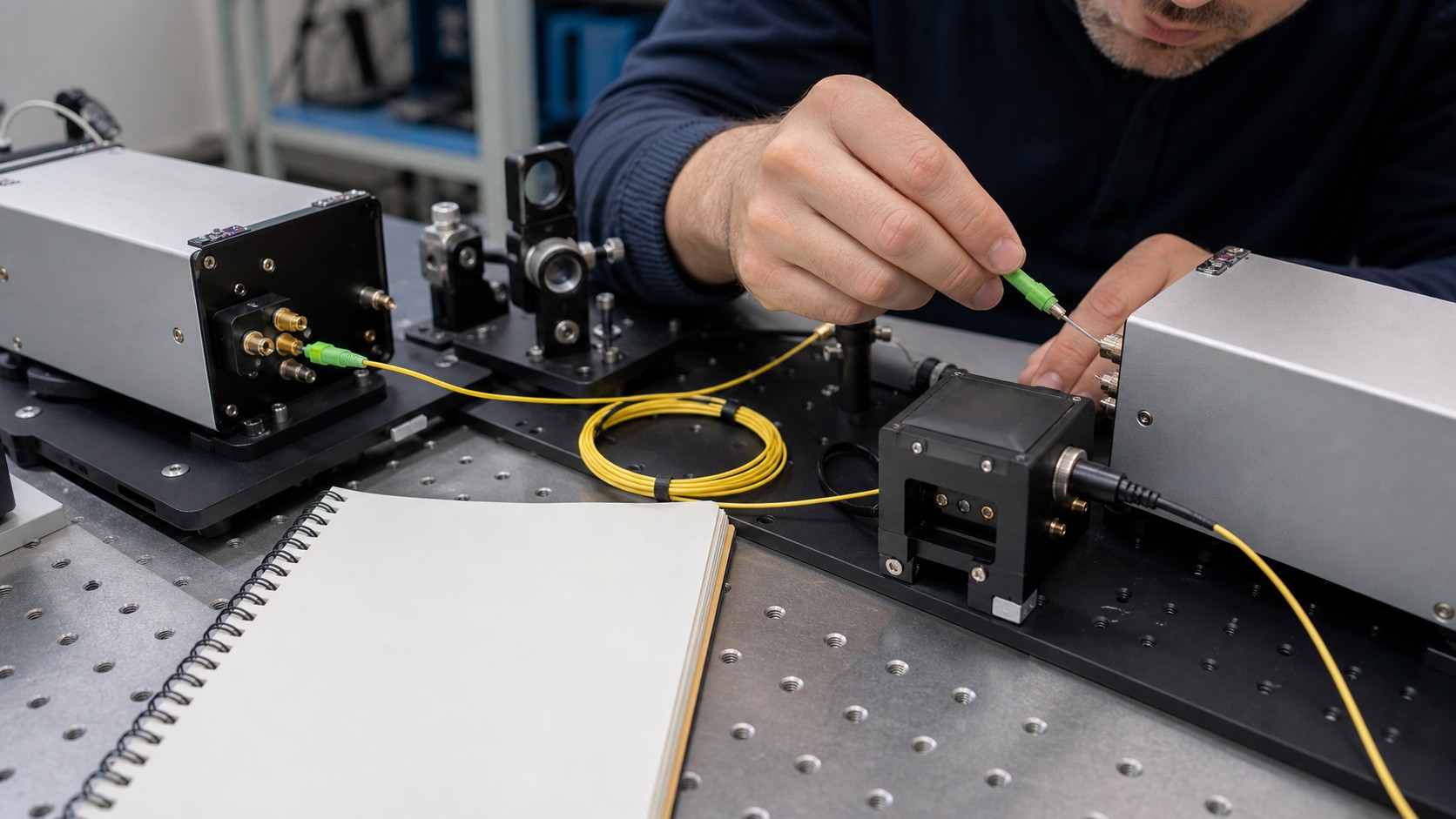
To understand quantum communication, it helps to picture a photon traveling through a fiber-optic cable. In ordinary fiber networking, light pulses represent digital information. Those pulses may be strengthened, routed, copied, and processed like classical signals. Quantum signals are different because the information is encoded in delicate quantum properties, such as polarization, phase, or time-bin states. These properties must be preserved carefully as the photon travels.
That fragility is both the challenge and the advantage. Quantum states are difficult to copy perfectly. They are also sensitive to measurement. In many quantum communication systems, if an outside observer tries to inspect the quantum signal, the act of observation can change the state in a detectable way. This creates a new model of secure communication: instead of simply hoping an attacker cannot solve a hard mathematical puzzle, the system can notice that someone has tampered with the quantum exchange.
However, quantum communication is not effortless. Photons can be lost in fiber. Signals weaken over distance. Equipment must be precise. Environmental noise can disrupt delicate states. Building a practical quantum network requires advanced lasers, photon sources, detectors, timing systems, error management, network protocols, and sometimes quantum repeaters or satellite links. The science is elegant, but the engineering is demanding.
Quantum Key Distribution: The Best-Known Use Case
Quantum key distribution is the most widely discussed form of quantum communication because it solves a clear problem: how to share secret encryption keys securely. In a simplified QKD setup, two parties often called Alice and Bob exchange quantum signals. These signals help them generate a shared secret key. They also compare certain information over a classical channel to check whether the key exchange was disturbed. If the disturbance is too high, they know the channel may not be secure and can reject the key.
The actual message is usually not sent through the quantum channel. Instead, the quantum channel helps create the key, while the encrypted message travels through ordinary infrastructure. This is important because it means quantum communication can integrate with existing networks rather than replacing everything at once. A bank, data center, government agency, or telecom provider could use quantum-secured links for especially sensitive connections while continuing to rely on conventional systems for most traffic. QKD is not perfect, and it does not solve every cybersecurity problem. It cannot stop malware on a user’s computer. It cannot protect a stolen password. It cannot fix poor security practices. It also depends on trustworthy hardware and careful implementation. But for securing certain high-value communication channels, QKD represents one of the most practical early applications of quantum networking.
The Quantum Internet: A Bigger Vision
The quantum internet is a more ambitious idea than QKD alone. A true quantum internet would connect quantum devices across distance, allowing them to exchange quantum information. This could eventually support secure communication, distributed quantum computing, advanced sensing networks, and new scientific experiments that are impossible with classical infrastructure alone.
Unlike today’s internet, which moves classical bits, a quantum internet would need to transmit or coordinate qubits. A qubit is the quantum version of a bit, but it does not behave like a simple one or zero. It can exist in quantum states that require careful handling. Qubits cannot be copied freely, and they are easily disrupted. That means a quantum internet cannot simply use the same routing, amplification, and switching methods that power the modern web.
In a future quantum internet, special network nodes may create, store, and manage quantum states. Quantum repeaters could help extend distance by overcoming signal loss. Quantum memory could temporarily hold quantum information. Classical communication would still be needed for coordination, control, and verification. The future network would likely be hybrid, combining classical and quantum systems into a layered infrastructure.
How Quantum Networks Could Be Built
A practical quantum network may begin with short-distance links between data centers, universities, government facilities, and telecom labs. These early networks can use existing fiber infrastructure in some cases, although quantum channels may require specialized conditions. Metropolitan quantum networks could connect important institutions within a city. Over time, regional and national networks could link those local systems together. For longer distances, fiber becomes more challenging because quantum signals weaken and cannot be copied like classical signals. This is where quantum repeaters and satellites become important. Quantum repeaters are devices designed to extend quantum communication without destroying the quantum information being transmitted. They are still an active area of research and engineering. Satellites offer another path because photons traveling through space may experience less loss than photons traveling through hundreds or thousands of kilometers of fiber.
A next-generation quantum communication system might use all of these methods. Fiber could connect local facilities. Trusted nodes could bridge certain distances in early deployments. Satellites could connect remote regions or cross continents. Quantum repeaters could eventually allow more direct and scalable quantum links. The future network will likely be built step by step, starting with specialized use cases before becoming more widespread.
Why Photons Are So Important
Photons are central to quantum communication because they travel fast, interact weakly with the environment, and can be guided through optical fiber or free space. A photon can carry quantum information through properties such as polarization or phase. This makes it a natural messenger for quantum networks.
Modern telecommunications already rely heavily on light. Fiber-optic cables send enormous amounts of data across the world using pulses of light. Quantum communication builds on this optical foundation but demands far greater precision. Instead of sending many strong light pulses that can be amplified along the way, quantum systems may work with extremely faint signals or even individual photons. Detecting and preserving those signals requires specialized equipment.
This is one reason quantum communication feels both futuristic and familiar. It is not disconnected from today’s networking world. It extends the logic of optical communication into a more sensitive and powerful domain. The same broad idea of sending information with light remains, but the rules become quantum mechanical.
Entanglement and the Future of Secure Networks
Entanglement is one of the most famous and mysterious concepts in quantum physics. When particles are entangled, their properties are linked in ways that cannot be explained by ordinary classical relationships. In quantum communication, entanglement could play a major role in future networks by helping distribute quantum correlations between distant nodes.
Entanglement does not allow faster-than-light messaging, despite common myths. It does not let someone instantly send a readable message across the universe. However, it can be used as a resource in quantum protocols, including quantum teleportation. Quantum teleportation does not transport matter like science fiction. Instead, it transfers the state of a quantum system using entanglement and classical communication. This could become useful for connecting quantum processors or moving quantum information between network nodes. In a mature quantum network, entanglement could support powerful new forms of coordination. It may help link quantum computers, synchronize quantum sensors, or create advanced cryptographic systems. The ability to distribute entanglement reliably across distance is one of the great engineering challenges of quantum communication.
Quantum Communication and Cybersecurity
Cybersecurity is one of the clearest reasons people care about quantum communication. Today’s security systems depend on a combination of encryption, authentication, access control, monitoring, software updates, and human behavior. Quantum communication does not replace all of that, but it could strengthen one of the most important layers: secure key exchange.
For organizations that move highly sensitive data, the ability to detect eavesdropping during key distribution is extremely valuable. Financial networks, military systems, research labs, healthcare data exchanges, and government agencies may all benefit from quantum-secured links. These systems could be used for backbone connections, inter-data-center links, or specific mission-critical channels where long-term confidentiality matters.
At the same time, quantum communication must be understood realistically. A network is only as secure as its full design. If attackers compromise an endpoint, steal credentials, manipulate software, or exploit poor operational practices, quantum-secured key exchange alone will not save the system. The future of cybersecurity will likely combine post-quantum algorithms, quantum communication, zero-trust architecture, hardware security, continuous monitoring, and better identity systems.
Quantum Communication and Artificial Intelligence
Artificial intelligence is increasing the demand for secure, high-integrity communication. AI systems depend on enormous datasets, cloud infrastructure, model updates, edge devices, APIs, and distributed computing environments. As AI becomes more integrated into finance, defense, medicine, robotics, transportation, and business operations, protecting the communication between systems becomes more important. Quantum communication could help secure high-value AI infrastructure. For example, cloud platforms that host sensitive models may eventually use quantum-secured channels between data centers. Research organizations may protect proprietary model training data. Governments may use quantum communication to secure AI systems involved in national security. Autonomous systems may need stronger methods for verifying commands and protecting data exchanges.
The intersection of AI and quantum communication is still emerging, but the strategic logic is strong. AI increases the value of data. Quantum computing may challenge existing encryption. Quantum communication may help protect the most important links in that evolving landscape.
Quantum Communication and the Future of Telecom
Telecom networks have always been the backbone of digital transformation. The move from copper lines to fiber, from 3G to 4G to 5G, and from local servers to cloud-connected infrastructure has changed how people live and work. Quantum communication could become another layer in the telecom evolution.
Telecom companies may eventually provide quantum-secured services for enterprises, governments, and critical infrastructure operators. They may build metropolitan quantum networks in major cities, connect secure data centers, or integrate quantum channels into fiber backbones. As 6G research develops, quantum technologies may also influence secure synchronization, sensing, and network optimization.
This does not mean every home router will become quantum overnight. Early quantum communication services will likely be specialized and expensive. They will serve high-security customers first. Over time, as components become smaller, cheaper, and more reliable, quantum-enhanced networking may become more common in commercial infrastructure.
Space-Based Quantum Communication
Satellites could play an important role in quantum communication because space offers a way to connect distant locations without sending photons through long stretches of lossy fiber. A satellite can transmit quantum signals to ground stations, potentially enabling secure key distribution across great distances. This makes space-based quantum communication especially interesting for international links, remote regions, maritime systems, and defense networks.
A future network could combine satellite and terrestrial systems. Ground-based fiber networks might handle local and regional quantum communication. Satellites could bridge continents or connect isolated locations. Hybrid systems could route secure keys across multiple paths, depending on distance, weather, infrastructure, and mission needs. Space-based quantum communication also has symbolic importance. It shows that quantum networking is not just a laboratory concept. It is becoming a serious area of global infrastructure competition. Nations and companies that master secure quantum links may gain strategic advantages in cybersecurity, science, finance, and defense.
The Biggest Challenges Ahead
Quantum communication faces significant obstacles before it becomes widespread. Distance is one of the biggest. Quantum signals can be lost or degraded, especially in fiber. Unlike classical signals, they cannot simply be copied and boosted along the way without destroying their quantum properties. This makes repeaters, error correction, and reliable quantum memory essential for future scaling.
Hardware is another challenge. Quantum communication equipment must be precise, stable, and secure. Photon sources, detectors, timing systems, and control electronics need to perform reliably outside ideal lab conditions. Costs must come down before the technology can move from specialized installations to broad commercial use.
Standardization will also matter. Networks become powerful when different systems can communicate smoothly. For quantum communication to scale, hardware vendors, telecom providers, researchers, governments, and cybersecurity organizations will need shared protocols, performance standards, testing methods, and interoperability rules. Without standards, the market could fragment into isolated systems that are difficult to connect.
What Quantum Communication Will Not Do
Quantum communication is powerful, but it is often misunderstood. It will not make all data instantly secure. It will not eliminate the need for passwords, identity management, software updates, firewalls, endpoint protection, or good cybersecurity training. It will not allow faster-than-light messaging. It will not magically replace the internet in one dramatic upgrade.
Instead, it will likely appear as a specialized layer within broader communication systems. Its early role will be to protect high-value links, support advanced research networks, and prepare infrastructure for a post-quantum future. Over time, as the technology matures, it may become part of standard secure networking. Understanding what quantum communication cannot do is just as important as understanding what it can do. The most successful adoption will come from practical expectations, not hype. Organizations will need to identify where quantum communication truly adds value and where other security tools are more appropriate.
Everyday Impact: How It Could Eventually Reach People
Most people may never directly interact with a quantum communication device. They may not see a “quantum” button on a phone or laptop. But they could still benefit from the technology in the background. Banking systems could use stronger secure links. Hospitals could better protect sensitive records. Cloud providers could secure data center connections. Government services could improve long-term confidentiality. Smart infrastructure could become harder to compromise.
In that sense, quantum communication may resemble other foundational technologies. Few people think about undersea fiber cables, data center routing protocols, or certificate authorities every day, but those systems make modern digital life possible. Quantum communication could become another hidden layer of trust beneath the services people use constantly.
The greatest impact may come when quantum communication is combined with other emerging technologies. AI, quantum computing, edge computing, 6G, satellite internet, smart cities, autonomous vehicles, and industrial automation will all require secure communication. Quantum networking may help protect the most sensitive parts of that connected future.
Business Opportunities in Quantum Communication
For businesses, quantum communication creates both opportunity and urgency. Technology vendors can develop hardware, software, testing tools, network management platforms, and integration services. Telecom providers can explore quantum-secured connectivity products. Cybersecurity firms can build consulting and implementation offerings around quantum-safe strategies. Cloud providers can prepare infrastructure for hybrid classical-quantum security models.
Enterprises do not need to install quantum networks immediately to start preparing. They can begin by understanding where their most sensitive long-term data lives, how encryption keys are managed, which systems require decades of confidentiality, and what partners or vendors are developing quantum-safe strategies. This preparation will make future adoption easier. The business case will be strongest where data has high value and long life. Financial institutions, defense contractors, pharmaceutical companies, healthcare systems, research labs, energy operators, and government agencies are likely early candidates. For general consumer applications, the timeline may be longer.
The Road to the Next Generation of Networks
The next generation of networks will not be built in a single leap. It will emerge through overlapping upgrades. Classical fiber networks will continue to expand. Post-quantum cryptography will become more common. Quantum-secured links will appear in specialized environments. Testbeds will grow into metro networks. Satellites may connect distant nodes. Quantum repeaters may eventually extend range and reduce dependence on trusted intermediate points.
This gradual evolution is normal for major infrastructure. The internet itself did not appear fully formed. It grew from research networks, standards, hardware improvements, commercial investment, and global adoption. Quantum communication will follow a similar path, shaped by breakthroughs, market demand, policy decisions, security needs, and engineering progress.
The most important thing to understand is that quantum communication is not just about speed. It is about trust. In a world where information is power, the ability to know whether a communication channel has been disturbed could become one of the most valuable features a network can offer.
A Future Built on Physics and Trust
Quantum communication represents a remarkable shift in how networks may be designed. Instead of relying only on faster hardware and stronger mathematical encryption, it introduces the possibility of communication systems protected by the behavior of nature itself. Photons, qubits, entanglement, quantum keys, and future repeaters may all become part of a new communication landscape.
The technology is still developing, and many challenges remain. Equipment must improve. Networks must scale. Standards must mature. Costs must fall. Security models must be tested carefully. Yet the direction is too important to ignore. As quantum computing advances and digital systems become more central to everyday life, the need for stronger communication security will only grow. Quantum communication is not the end of today’s internet. It is the beginning of a deeper layer beneath tomorrow’s networks. It points toward a future where information does not merely move faster, but moves with greater confidence, greater protection, and a new kind of technological trust.