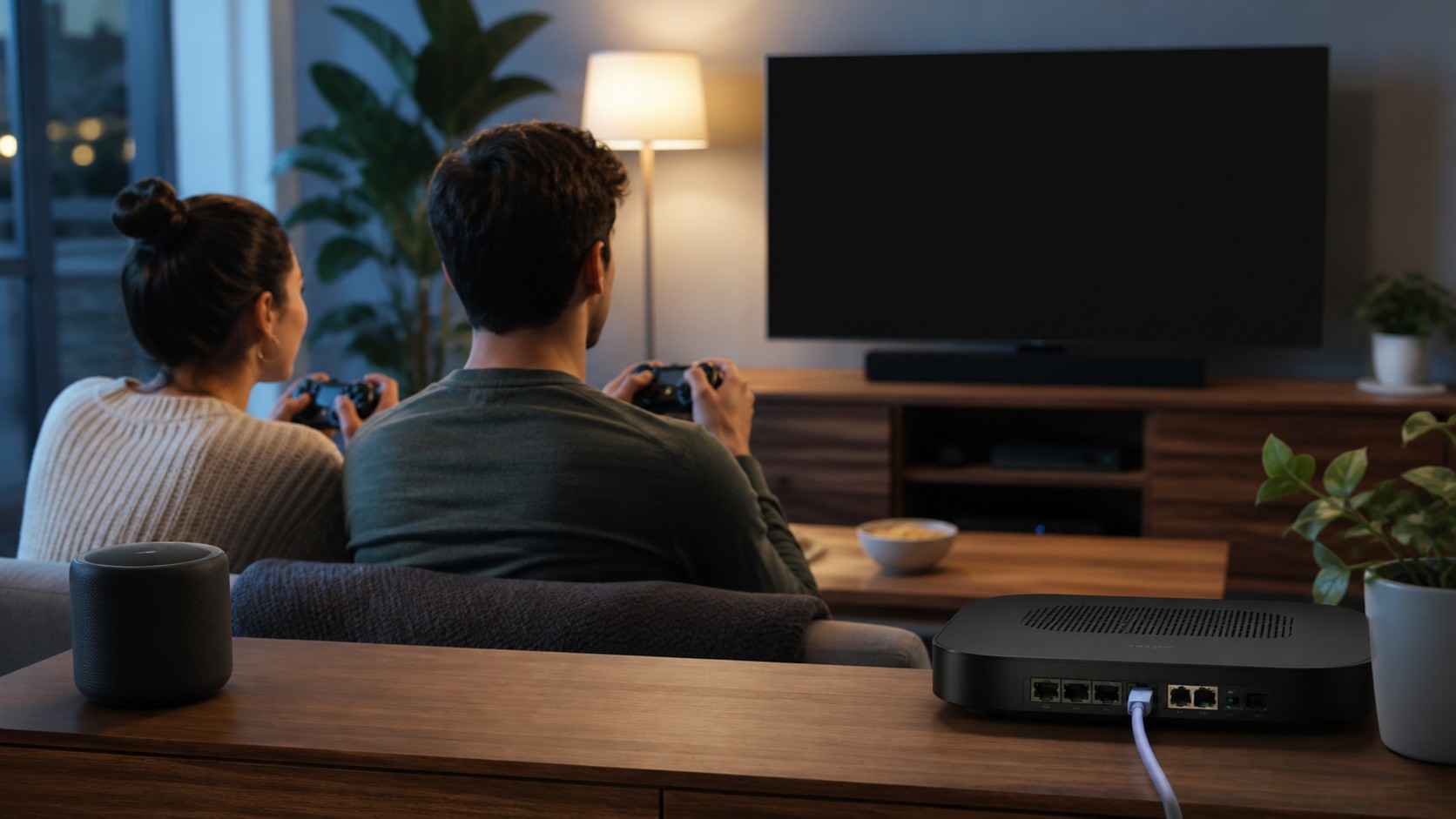
Fiber Turns Entertainment Into a Real-Time Network Experience
Streaming and gaming feel like app experiences, but the quality depends on a physical network that can move enormous amounts of data with very little delay. Fiber optics changed home entertainment because it gives households a stronger path for high-resolution video, cloud saves, live multiplayer sessions, large downloads, video calls, and several devices working at once. The revolution is not only sharper movies or faster game updates. It is the shift from one screen using the internet to the whole home expecting interactive media to respond immediately.
A: Often, especially for upload, but local plan tiers and equipment still matter.
A: No. Fiber brings service to the home; Wi-Fi distributes it indoors.
A: Construction cost, permits, pole access, and local demand shape deployment.
A: Only if your devices, router, and workload can use that speed.
A: Yes. Power failures, equipment faults, and cable cuts can still interrupt service.
A: Yes, when routing and home networking are also strong.
A: Upload affects calls, backups, creators, cameras, and remote work.
A: Run wired and wireless tests in the rooms where service matters.
A: Yes. Local and municipal providers can be excellent where available.
A: The plan with enough speed, fair pricing, low latency, and dependable support at your address.
Streaming Changed the Meaning of Household Bandwidth
Older home internet use often revolved around browsing, email, and one video stream at a time. Modern entertainment is different. A household may have several high-resolution streams, a live sports feed, a console update, cloud photos, smart speakers, and a video call running at once. Fiber helps because it gives the access network more room to carry that simultaneous demand without turning every activity into a competition.
The key is sustained capacity, not a single impressive burst. Streaming platforms constantly adjust quality based on available throughput and reliability. When the connection is stable, the app can hold a higher-quality stream without stepping down every time another device gets busy.
Gaming Depends on More Than Download Speed
Game advertising often pushes download speed because big updates are easy to understand. Download speed does matter when installing a new title or grabbing a large patch. During live play, however, latency, jitter, packet loss, routing, and server performance can matter more than the raw size of the pipe. A fast connection with unstable delay can still feel bad. Fiber can help by lowering access-network delay and improving consistency, especially when upload capacity is strong. The best gaming experience also depends on the path beyond the home, including the provider's routing and the distance to the game server.
Uploads Are Part of the Entertainment Story
Entertainment is no longer purely download-heavy. Livestreamers send video out. Players use voice chat. Families make video calls while streaming. Phones back up photos. Creators upload footage. Cloud gaming and social features exchange constant data. A connection with weak upload speed can become a bottleneck even if downloads look strong.
This is where many fiber plans stand apart. Symmetrical or high-upload service gives the household more balance. Instead of treating upload as an afterthought, fiber can support a home where people both consume and create media throughout the day.
Latency and Jitter Shape the Feeling of Real Time
Latency is the time it takes for data to travel to a server and back. Jitter is inconsistency in that timing. Video streaming can often hide small timing issues through buffering, but gaming and live communication cannot hide them as easily. A sudden delay spike can make movement stutter, voice chat break, or a cloud game feel disconnected from the controller. Fiber does not control every part of that path, but it can make the first mile stronger. A cleaner access link gives the rest of the network a better starting point. That is especially valuable when several household devices are active at once.
The Router Can Become the New Bottleneck
A fiber upgrade can reveal weaknesses inside the home. An older router may not handle faster service well. A router hidden behind a television or inside a cabinet may create poor coverage. A console on distant Wi-Fi may underperform while a wired laptop beside the router looks excellent.
This is why installation should include a home-network check. Place the router carefully, use Ethernet for devices that need stability, and consider wired mesh backhaul in large homes. Fiber brings capacity to the door; the local network distributes it.
Cloud Gaming Raises the Standard
Cloud gaming is demanding because the game runs in a remote data center while the home receives video and sends controller input. The experience depends on quick round trips, consistent bandwidth, and reliable routing. Traditional downloads can wait; cloud gaming cannot. Fiber is well suited to that style of service when the provider has strong interconnection and the home network is clean. The screen may be blank in a living-room photo, but the invisible exchange between controller, router, access network, data center, and display is the entire experience.
Streaming Quality Also Depends on Platforms
A strong fiber connection cannot fix every streaming issue. The content platform, app software, streaming device, content delivery network, and regional server load all affect playback. Sometimes a single app struggles while other services work perfectly, which points away from the home connection.
The practical test is comparison. Try a wired device, another streaming app, another room, and another time of day. When the problem follows one device or platform, a fiber plan upgrade may not be the missing piece. When every service struggles during busy hours, the network deserves closer attention.
Downloads Still Matter for Modern Games
Even if live play uses modest bandwidth, game libraries are enormous. Full downloads, patches, texture packs, and seasonal updates can be tens or hundreds of gigabytes. Fiber makes those waits shorter and reduces the chance that one download ruins the rest of the household's evening. This matters for families as much as enthusiasts. A large update can arrive at the same time someone wants to stream, work, or join a class. More capacity gives the household flexibility, especially when the router can manage traffic fairly.
How to Judge a Fiber Entertainment Upgrade
Start with a wired test near the router to confirm the service is performing. Then test the devices that actually matter: the gaming PC, console, streaming box, smart TV, and phones in common rooms. Measure not only speed but also ping stability and packet loss when possible.
A good upgrade should feel less dramatic than the advertising suggests. Apps simply start, streams hold quality, updates finish sooner, and games feel consistent. The best technology often disappears into ordinary reliability, which is exactly what entertainment needs.
The Entertainment Bottom Line
Fiber optics enables the streaming and gaming revolution by giving homes more capacity, stronger upload performance, lower access delay, and better consistency. It turns entertainment from a single-device activity into a whole-home network expectation. The full benefit arrives when fiber is paired with good routing, enough provider capacity, modern home Wi-Fi, and wired connections where they make sense. Fiber is the foundation, not the whole house. Build on it well, and streaming and gaming feel effortless.
Why Fiber Handles Simultaneous Use So Well
The biggest entertainment change is not that one person can stream a movie. Many older connections could do that. The change is that a household can support several demanding activities at the same time without everyone negotiating who gets to use the network. Fiber's high capacity and often stronger upload path make that shared experience less fragile.
This matters because entertainment has become social and continuous. One person may be watching a live stream while another downloads a game and someone else joins a video call. The connection has to handle bursts, steady streams, and interactive traffic together. Fiber gives the home more margin for that mix.
Content Delivery Networks Still Matter
When a movie starts quickly, the fiber line is only part of the story. Streaming platforms use content delivery networks to place popular video closer to viewers. If the provider has good interconnection to those systems, the stream has a shorter and cleaner path. If the path is congested, even a fast access line can feel inconsistent. This is why two services can behave differently on the same connection. One platform may have better regional capacity, while another may be overloaded or routed less efficiently. Fiber improves the first mile, but the full media path still includes servers, caches, peering, and application design.
Game Downloads Reward Sustained Throughput
Game downloads are a simple place to see fiber's practical value. A large update does not need ultra-low latency, but it does need sustained throughput. If the connection can hold high speed without disturbing the rest of the home, the update becomes a background event instead of a household interruption.
The router and device still influence the result. A wired gaming PC may use the fiber plan far better than a console on weak Wi-Fi. For heavy players, running Ethernet to a console or gaming room can be the difference between buying a fast plan and actually feeling it.
Livestreaming Makes Upload Visible
Livestreaming exposes upload limitations quickly. A creator sending high-quality video out of the home needs consistent upstream capacity, stable latency, and low packet loss. If upload collapses, viewers see stutters, dropped frames, or reduced quality even if downloads remain fast. Fiber can make creators less cautious about every other household activity. They may be able to stream while another person watches video or backs up files. That confidence is part of the entertainment revolution because homes are no longer only consuming media; they are producing it.
What Providers Need to Get Right
Providers have to design beyond the drop to the house. Neighborhood split ratios, optical equipment, aggregation capacity, peering, routing, and support practices all influence the entertainment experience. A provider that sells high speed but underbuilds upstream capacity will eventually show weakness during popular viewing hours or update releases.
Customers should look for performance that stays steady. The best fiber service does not only win a test at noon. It keeps streams clear, games responsive, uploads stable, and support honest when something breaks. That steadiness is what makes the revolution feel normal.
Latency Is Also About Consistency
Gamers often talk about low ping, but consistency is just as important. A connection that jumps from smooth to delayed every few seconds can feel worse than one with a slightly higher but steady response time. Fiber's access link can reduce one source of variation, especially compared with networks that are more exposed to shared upstream bottlenecks. The rest of the path still counts. Game servers, regional routing, home Wi-Fi, and device performance all affect the final feel. Fiber gives the session a better foundation, but competitive players should still wire important devices and test the actual games they play.
Streaming Households Need Headroom
A video stream usually buffers ahead, which hides small delays. The problem begins when the household has too little headroom. If every device is close to saturating the connection, the stream may lower quality or pause. Fiber provides more breathing room, so entertainment survives ordinary household activity.
That headroom also helps with future media formats. Higher-resolution video, better audio, interactive streams, and live social features all increase demand. Fiber is valuable because it gives homes room to grow without replacing the access line every time entertainment habits change.
Why Fiber Helps Shared Living Spaces
Dorms, apartments, and multi-person homes expose network weakness quickly. Several people may watch, play, upload, study, and work at the same time. A connection that feels fine for one person can feel unfair when every roommate has a different deadline or match starting at once. Fiber does not solve every fairness problem, but it raises the ceiling and often improves upload balance. Pair it with a capable router, sensible device wiring, and clear household expectations, and the connection becomes less of a daily negotiation.
The Home Network Should Match the Fiber Line
A fiber plan can only shine when the home network can distribute it. That may mean a modern router, Ethernet to entertainment centers, wired backhaul for mesh nodes, and careful placement away from cabinets and dense electronics. Otherwise the home may be paying for capacity that Wi-Fi cannot deliver consistently.
The best setup is usually practical rather than flashy. Wire the console or gaming PC if possible. Give the router air and a central location. Test the rooms where entertainment happens. Fiber is the main road; the home network is every driveway that reaches it.