A New Intelligence Layer for Global Connectivity
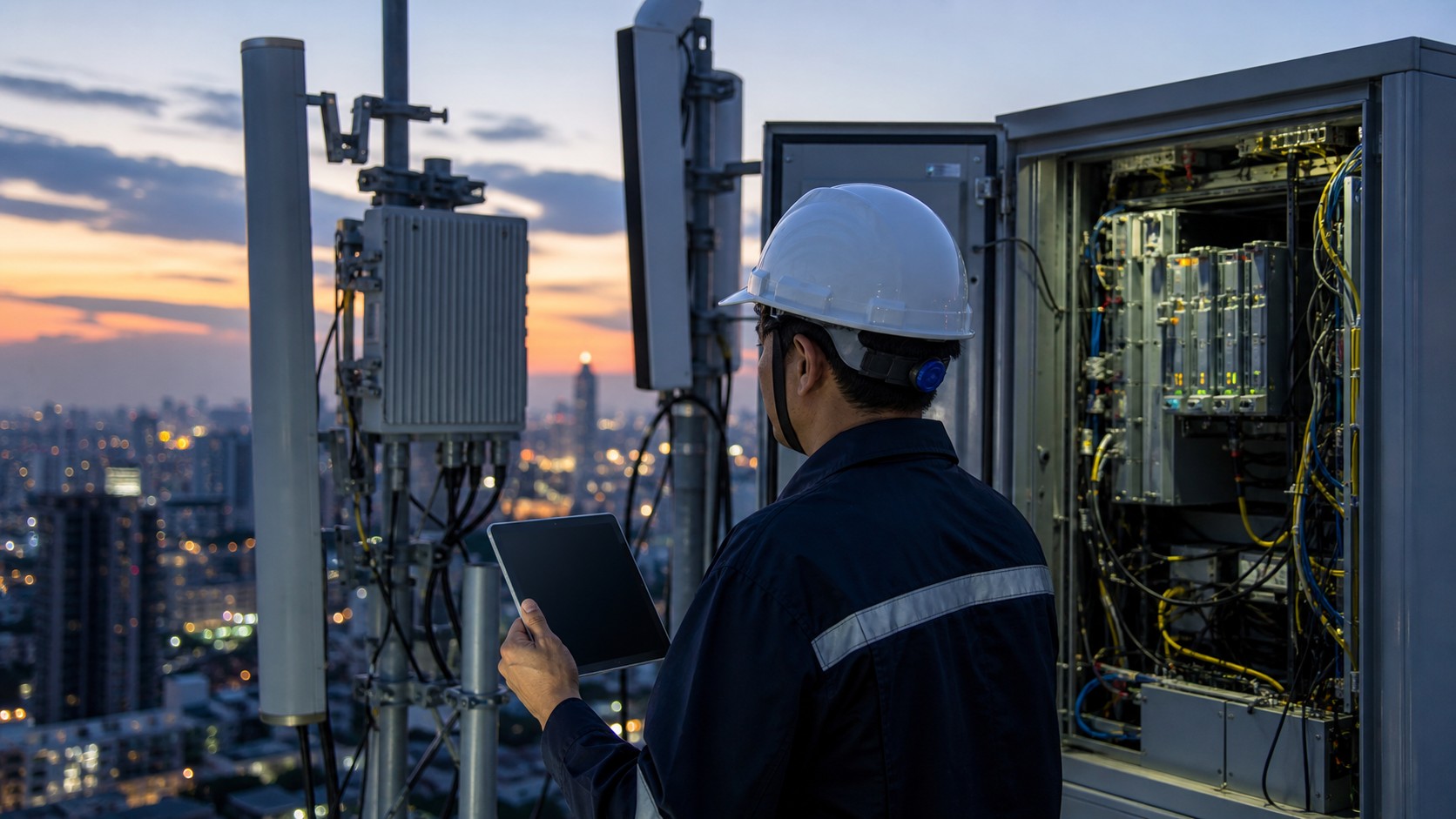
Telecommunications has entered a new era, and the defining force behind that transition is not simply faster infrastructure or broader wireless coverage. It is intelligence. For decades, telecom networks expanded by adding more towers, more fiber, more switching capacity, and more devices. That model built the connected world people rely on today, but it also created staggering complexity. Networks now stretch across continents, serve billions of users, support cloud platforms, connect industrial systems, and carry enormous streams of real-time data every second. Artificial intelligence is emerging as the technology that makes this vast ecosystem manageable, efficient, and adaptive. AI in telecommunications is no longer a futuristic experiment tucked inside innovation labs. It is rapidly becoming part of everyday network operations. Telecom providers use AI to analyze traffic, predict failures, optimize performance, strengthen security, and personalize customer experiences at a scale human teams alone could never match. As 5G matures and future generations of wireless infrastructure begin to take shape, AI is shifting telecom from a reactive industry into a predictive one. Instead of merely responding to congestion, outages, or changing demand, intelligent networks can increasingly anticipate what comes next and adjust before problems become visible to users.
A: No. It usually supports planning, monitoring, optimization, and support.
A: Fault detection, capacity planning, security triage, energy use, and support routing.
A: Overtrusting automation without clear data, logs, testing, and rollback plans.
A: Yes, if it detects patterns quickly and guides crews to the real cause.
A: No. Towers, fiber, spectrum, equipment, and field work still matter.
A: Ask how AI decisions are measured, reviewed, and corrected.
A: Yes, especially in radio optimization, slicing, and capacity management.
A: Yes. Network analytics can involve sensitive usage and location patterns.
A: Use reliability, latency, coverage, repair time, and customer experience.
A: A focused use that makes service more reliable and accountable.
Why Telecom Needed an AI Revolution
Telecommunications has always depended on coordination. Signals must be routed, capacity must be balanced, resources must be assigned, and service quality must be preserved even as millions of users move, stream, call, game, and work simultaneously. In earlier generations of telecom, those challenges were difficult but still manageable with traditional engineering models and rule-based automation. Today, the scale is different. Modern telecom networks deal with mobile broadband, edge computing, cloud-native infrastructure, machine-to-machine traffic, smart city systems, autonomous devices, and enterprise workloads that often demand near-instant response times.
This level of complexity exposes the limits of static network management. Human operators cannot manually interpret every traffic pattern in real time, nor can fixed rules account for every shift in usage, environment, device behavior, or infrastructure stress. AI is valuable because it can process huge volumes of data, detect patterns invisible to manual review, and continuously learn from changing conditions. That turns global networks into systems that do not just carry information, but actively understand how to handle it more effectively. In practical terms, AI gives telecom the ability to become more flexible, more resilient, and more efficient at the same time.
How AI Improves Network Performance
One of the most powerful uses of AI in telecommunications is network optimization. Every telecom network generates an immense amount of operational data, including signal strength, latency, traffic density, device demand, equipment status, and geographic load patterns. AI systems can analyze this data continuously and make adjustments that improve how the network performs across different times, places, and conditions.
This matters because network demand is never static. A business district may surge during work hours and quiet down at night. A stadium may create an intense burst of traffic during an event. A residential neighborhood may spike in video traffic each evening. AI can recognize these patterns and help reallocate capacity in real time, reducing congestion and improving user experience. Instead of operating with a one-size-fits-all model, telecom providers can run networks that behave more like adaptive ecosystems. Resources shift where they are needed most, with greater precision and less waste.
AI also improves radio access networks by helping with spectrum efficiency, interference reduction, and signal path optimization. These are critical in dense urban environments where many users compete for limited wireless resources. By making faster, better-informed decisions, AI enhances both speed and reliability, which are essential in a world where connectivity is expected to feel instant.
AI and the Rise of 5G Intelligence
5G is often described in terms of speed, but its true importance lies in flexibility. It is designed to support an enormous range of use cases, from mobile streaming and cloud gaming to smart factories, remote robotics, and connected vehicles. That flexibility creates extraordinary opportunity, but it also increases operational complexity. AI helps make 5G practical by turning its theoretical capabilities into manageable, scalable reality.
One major example is network slicing. This allows telecom providers to create multiple virtual networks on top of shared physical infrastructure, with each slice optimized for a different purpose. A hospital may need ultra-reliable, low-latency performance. A logistics company may need massive device connectivity. A consumer entertainment service may need high throughput during peak hours. AI helps determine how these slices should be provisioned, monitored, and adjusted in real time. Without intelligence in the system, the promise of highly tailored 5G services becomes much harder to deliver efficiently. AI also supports beamforming, dynamic spectrum allocation, and edge orchestration, all of which are crucial to extracting more value from 5G deployments. The result is not just a faster wireless network, but a smarter one. 5G becomes far more than a radio upgrade. It becomes an intelligent platform that can adapt to the different demands placed on it every second.
Predictive Maintenance and Self-Healing Networks
Telecom infrastructure is expensive, distributed, and mission-critical. A failure in one location can affect thousands or even millions of users, and diagnosing problems across large physical and virtual systems can be time-consuming. AI transforms this process by enabling predictive maintenance, which means identifying likely failures before they become service outages.
This works by training models on operational histories, equipment behavior, environmental conditions, and anomaly patterns. When the system detects signs that a component is drifting toward failure, maintenance teams can intervene early. That reduces downtime, lowers repair costs, and prevents cascading disruptions. Instead of waiting for something to break, telecom providers can move toward a preventive model built on probabilities and early signals.
The next step beyond predictive maintenance is the self-healing network. In these environments, AI does not just flag a problem. It helps identify the cause and initiates corrective action automatically. Traffic can be rerouted, workloads can be shifted, configurations can be adjusted, and performance can be stabilized with minimal human delay. This is one of the most exciting shifts in telecommunications because it changes the role of the network itself. It becomes an active participant in preserving service quality rather than a passive structure that must be constantly managed from the outside.
Strengthening Telecom Security With AI
As telecom networks become more digital, virtualized, and distributed, security becomes more challenging. Traditional defenses often depend on known attack patterns or fixed thresholds, which makes them less effective against fast-changing threats. AI gives telecom security a more dynamic and intelligent foundation by identifying abnormal behavior in real time and responding faster than static systems can.
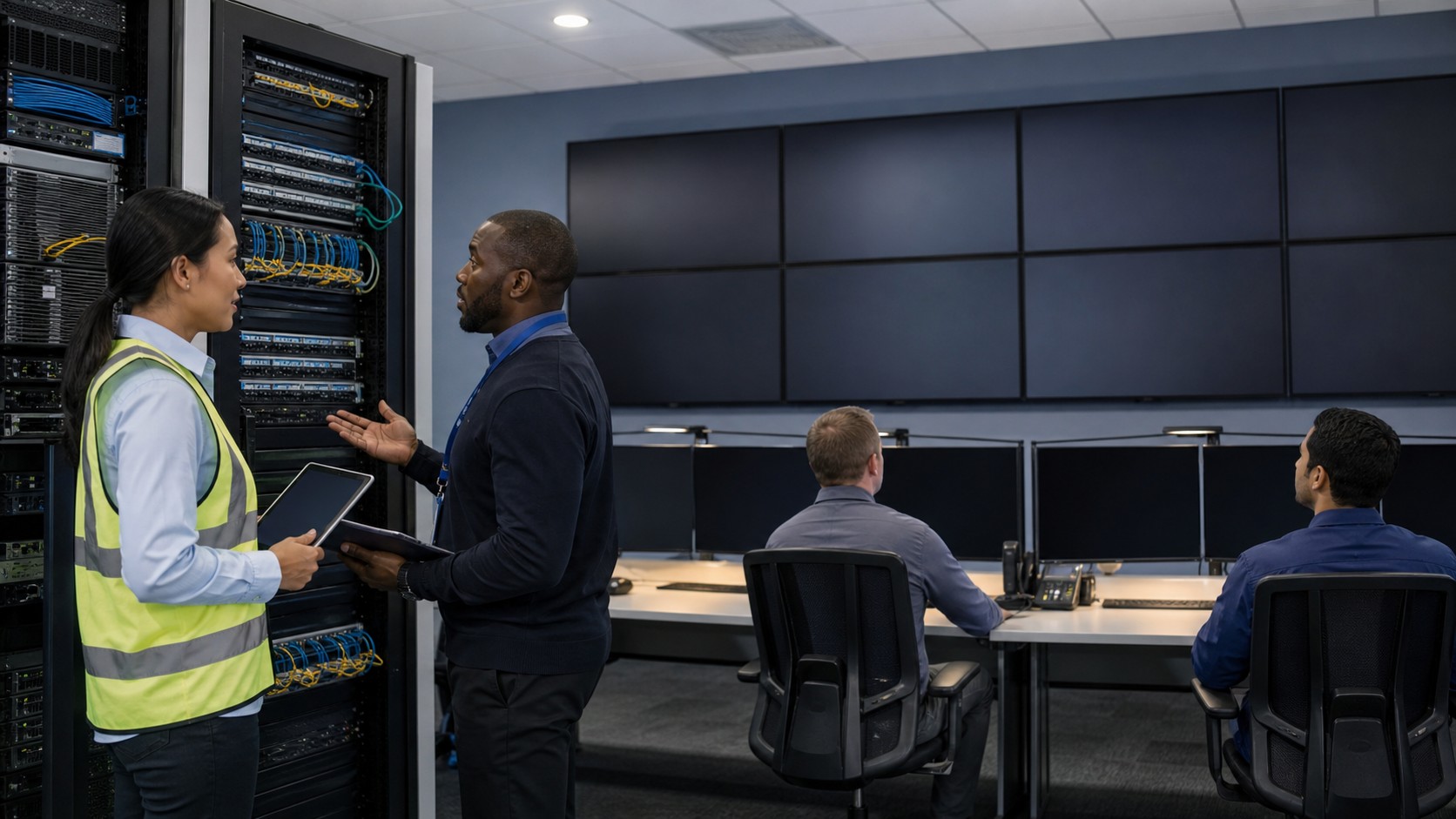
In practical terms, AI can detect fraud, unauthorized access attempts, suspicious traffic movements, and emerging anomalies that may indicate cyberattacks. It can correlate events across large systems and distinguish between routine variation and genuinely risky behavior. This matters in telecommunications because the network is no longer only supporting phone calls or mobile browsing. It increasingly supports industrial control systems, public infrastructure, enterprise cloud connectivity, and sensitive data flows across global environments. AI also helps reduce the operational burden of security teams. By automating threat triage and prioritizing the most serious events, it allows human experts to focus on the highest-value investigations and response strategies. In a telecom environment where speed matters, that capability is essential. Security must move at the same pace as the networks it protects, and AI makes that far more realistic.
Personalizing the Customer Experience
The transformation of telecommunications is not only about infrastructure. It also changes how providers interact with customers. Telecom users expect seamless service, quick support, personalized offers, and reliable performance across multiple devices and applications. AI makes it possible to deliver these experiences in more targeted and proactive ways.
By analyzing usage patterns, service behavior, and interaction history, AI can help providers understand what different customers need and when they are likely to need it. This can improve service recommendations, reduce churn, and enable more personalized support journeys. AI-powered assistants and support tools can resolve common issues quickly, while advanced analytics help providers identify recurring friction points before they become large-scale customer dissatisfaction problems.
This shift matters because telecommunications has become more competitive and experience-driven. Network quality is still important, but so is how clearly, smoothly, and intelligently a provider engages with users. AI allows telecom companies to move away from broad, generic service models and toward experiences that feel more responsive and relevant.
AI at the Edge and the Expansion of Real-Time Services
One of the most important trends in modern telecommunications is the movement of computing power closer to the user. Edge computing reduces the distance data must travel, which cuts latency and improves responsiveness. AI and edge computing together create powerful new possibilities for telecom networks, especially in applications where timing is critical.
Consider autonomous systems, industrial monitoring, augmented environments, smart transportation, and interactive real-time platforms. These services often cannot depend on long round trips to distant cloud centers. Decisions need to happen locally and immediately. AI at the edge allows telecom networks to process conditions, prioritize actions, and adapt service delivery near the point of use. This gives telecom a more strategic role in digital infrastructure. Instead of simply transporting data, networks increasingly become distributed intelligence platforms. They host decision-making, accelerate services, and support new business models built around low-latency performance. That is one reason AI in telecommunications is such a powerful theme: it expands the meaning of what a network actually is.
The Global Impact on Industries and Infrastructure
The influence of AI-driven telecommunications extends far beyond telecom companies themselves. Smarter networks change what other industries can build, automate, and scale. Manufacturing can rely on more precise connected systems. Transportation can support real-time fleet coordination. Healthcare can expand remote monitoring and responsive care environments. Energy systems can operate with more visibility and adaptive control. Smart cities can connect traffic systems, public safety tools, utilities, and environmental sensors more efficiently.
In this sense, AI in telecommunications is a foundational technology shift. It enables better connectivity, but more importantly, it enables more intelligent coordination across large systems. That has global implications. Countries investing in next-generation telecom infrastructure are not just improving internet performance. They are building the connective tissue for future economies, digital services, and critical operations.
Because telecom sits at the center of so many sectors, improvements in intelligence and resilience create ripple effects across society. The network becomes a strategic layer of national and commercial capability, and AI becomes the engine that helps it perform at the level modern demands require.
Challenges That Come With Intelligent Networks
Despite its promise, AI in telecommunications is not without challenges. One of the biggest is data governance. AI systems depend on enormous volumes of data, and telecom networks handle highly sensitive operational and user information. Providers must ensure that data is managed responsibly, securely, and transparently. Trust is essential, especially as networks become more autonomous. There are also integration challenges. Many telecom environments combine legacy infrastructure with modern cloud-native systems, which can make it difficult to deploy AI consistently across the entire network. Interoperability, scalability, and model reliability all matter. An AI system that performs well in one region or workload may need significant adjustment for another.
Another challenge is talent and organizational change. AI adoption is not simply a software upgrade. It reshapes workflows, decision-making structures, and operational models. Telecom companies must develop the right expertise not only to deploy AI tools, but to govern and improve them over time. The most successful organizations will likely be the ones that combine deep telecom engineering knowledge with strong data science and systems integration capabilities.
Beyond 5G: The Road to Autonomous Global Networks
As attention begins to move beyond 5G, the role of AI becomes even more central. Future wireless generations are expected to be more distributed, more intelligent, and more tightly integrated with cloud, edge, and software-defined systems. In many ways, the next era of telecom will not just use AI. It will be designed around it from the start.
That points toward autonomous networks capable of managing resources, optimizing performance, detecting risks, and orchestrating services across layers with minimal human intervention. These networks will likely support richer digital experiences, more connected machines, and more advanced industrial ecosystems than anything the telecom sector has managed before. AI will not replace telecom engineering, but it will redefine what engineering can accomplish when networks are built to learn, adapt, and respond continuously.
The future of telecommunications is not just about faster downloads or denser coverage maps. It is about networks becoming intelligent enough to handle the demands of a world where everything is connected, dynamic, and data-driven. AI is what gives telecommunications that intelligence. It is turning global networks into living systems that can sense, decide, and improve in real time. That shift is already underway, and its effects will shape the next chapter of connectivity across industries, cities, and everyday life.